
Boardrooms have long carried an unspoken dress code, and it has nothing to do with clothing. Leaders were expected to be composed, impenetrable, and emotionally unreadable. Empathy was tolerated in theory, but in practice, it was often treated as a liability. For women in senior roles especially, the calculus was harsher: too warm and you lacked authority, too firm and you lacked likability. The standard kept shifting, and the exhaustion of chasing it was real. Many women learned to perform a version of themselves that fit the room, while quietly shelving the qualities that made them genuinely good at their work.
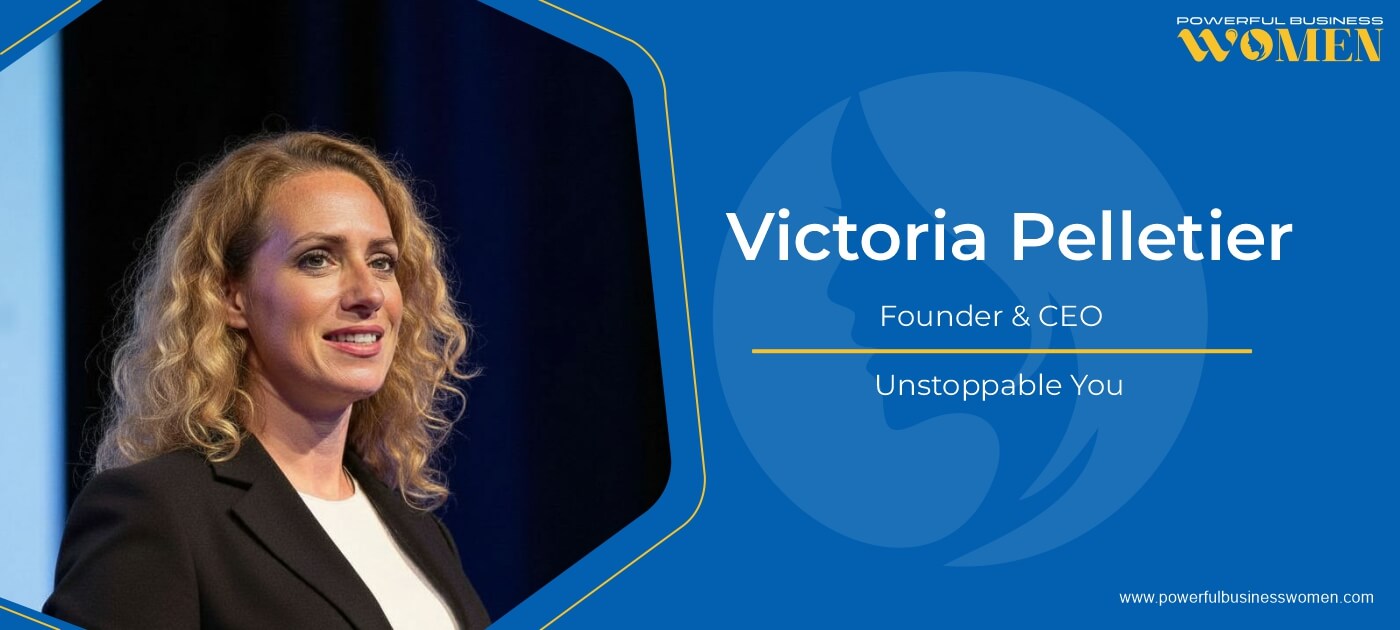
Victoria Pelletier has navigated that friction firsthand. She tried, for a stretch of her career, to fit the mold those rooms seemed to demand. Then, deliberately and without apology, she stopped. What followed was not just a shift in how she led, but a complete rethinking of what leadership could mean for everyone around her. Today, as Founder and CEO of Unstoppable You, she channels that evolution into work that reaches leaders, organizations, and individuals grappling with the same questions she once wrestled with alone.
The Part That Came First
Her early life is not something she references for effect. It is central to how she thinks.
Childhood adversity shaped her in ways that were not optional. Resilience was something she had to rely on before she could name it.
“The earliest experiences that shaped me were not the traditional ones people might expect. They ultimately shaped my determination, my empathy for others, and my belief that our past does not have to define our future. I learned early that life isn’t always fair, but we still have agency in how we respond to challenges.”
That idea, agency over circumstance, continues to show up in her work as a baseline assumption.
When Success Stopped Looking the Same
Early in her career, success looked familiar. Titles mattered. Progression mattered. Financial stability mattered. Given her starting point, those markers represented something real.
Over time, that definition started to shift. Not abruptly, but enough that the old version stopped being sufficient.
“Today, success is far more about impact and alignment with my values. It’s about doing the right thing, leading with integrity, and leaving the organizations, communities, and people I touch better than I found them. In 2026, success for me is less about accumulation and far more about contribution and legacy.”
She includes her role as a parent in that definition without separating it from the rest. Raising two children who will contribute positively to the world is part of the same equation.
Confidence, Built in Layers
There is a tendency to talk about confidence as if it arrives fully formed. Victoria does not describe it that way.
Her shift from self-doubt to self-belief did not come from a single moment. It was slower than that. More deliberate.
“I’ve never been a believer in the idea of ‘fake it until you make it’ when it comes to competence or expertise. But I do believe that sometimes you have to project confidence before you fully feel it. I learned to act confident until I eventually believed in that confidence myself.”
There is a practical edge to that view. It allows for growth without pretending mastery. The internal work, self-reflection, self-awareness, acceptance, came alongside it.
Letting Go of What Didn’t Fit
For a long time, she operated within a version of leadership that required distance. Emotional control was expected. Vulnerability was something to manage carefully, if at all.
She followed that model, until she didn’t.
“One of the biggest biases I had to unlearn was the idea that being emotional or vulnerable in leadership was a weakness. The qualities I had once been told to suppress, empathy, authenticity, and emotional openness, were actually some of my greatest leadership strengths.”
That shift made her leadership more effective.
“Today, I firmly believe that humanity in leadership isn’t a weakness; it’s what allows leaders to build trust, connection, and truly resilient teams.”
What She Tells Women, Without Editing It Down
Victoria does not soften her advice to make it more palatable.
“Don’t shrink, don’t conform, and don’t dilute who you are to fit someone else’s expectations of leadership. Be bold, be authentic, and be confident in the value you bring.”
There is a clarity in that, and also a challenge. It assumes that the cost of fitting in is often higher than the risk of standing out.
She frames leadership less as something to adapt to, and more as something that can, and should, expand.
The Throughline
When she speaks about her journey, she does not position it as exceptional. She positions it as evidence.
“I hope my story shows young women that where you start does not determine where you can go. You don’t have to change your personality or suppress your humanity to succeed in leadership.”
That idea carries into how she addresses women more broadly.
“Be bold about your ambitions, confident in your voice, and unapologetic about the space you take up. Lift others as you climb. Each of us has the power to help redefine what leadership and success look like, not just for ourselves, but for the generations that follow.”
And then, simply:
“Be #Unstoppable.”