
Autism counseling and family support sit in a space where clinical expertise meets everyday life. Families navigating autism are often balancing school systems, social expectations, marriage strain, and the emotional weight of feeling misunderstood. Ministers and missionaries face their own quiet pressures, serving others while struggling to find safe spaces for their own marriages and families. Autism Spectrum Resources for Marriage and Family, LLC was built to meet these realities head on. The practice provides specialized coaching and consulting, advocacy, and education designed to strengthen marriages, support special needs families, and promote deeper awareness of neurodiversity within both home and church communities.
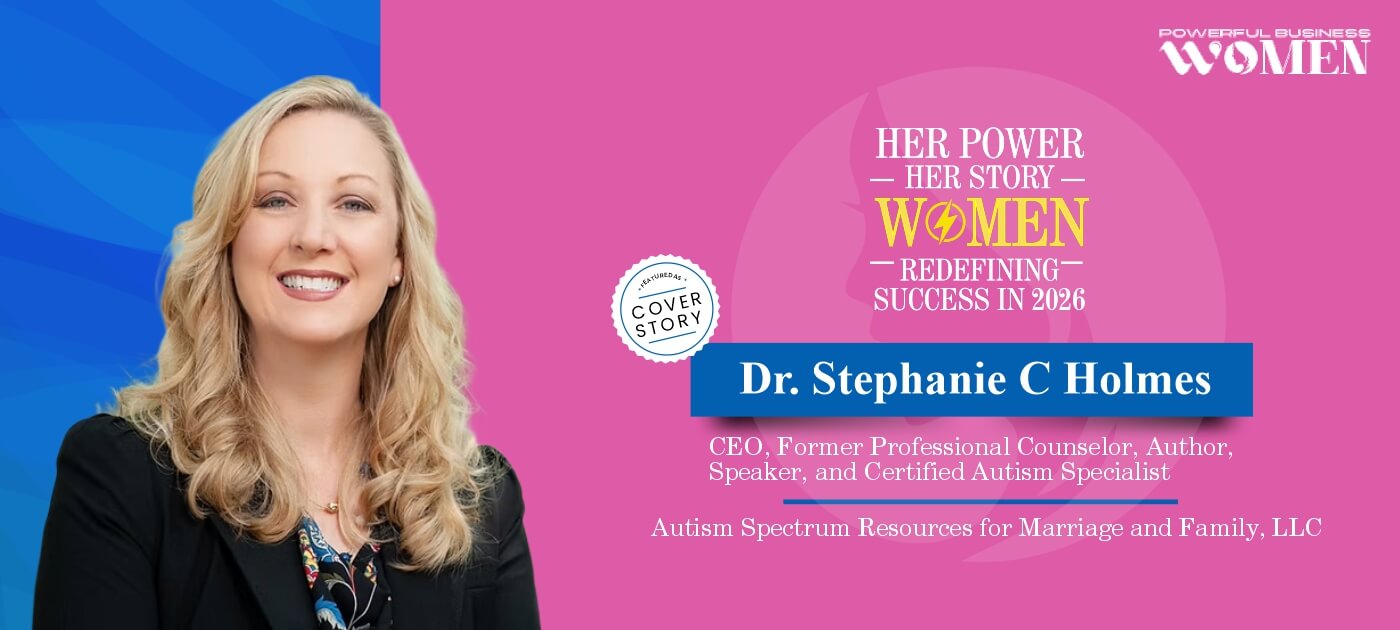
At the heart of this work is Dr. Stephanie C. Holmes, CEO, former professional counselor, author, speaker, and Certified Autism Specialist. She has shaped her career around two focused passions: helping couples where one spouse is on the spectrum, and supporting families in ministry who often live under unique relational stress. She understands that traditional marriage therapy does not always translate well to an neurodiverse marriage, and she tailors her approach to reflect the nuanced dynamics of communication, processing, and connection within those relationships.
With academic honors that include graduating summa cum laude in both her undergraduate and master’s programs and earning an Ed.D from Abilene Christian University with distinction, Dr. Holmes blends scholarship with lived experience. Her leadership is grounded in compassion, conviction, and a steady belief that strong families create lasting impact far beyond the walls of any counseling office.
Yet what truly defines Dr. Holmes is not simply academic achievement. It is the quiet conviction that families deserve support tailored to their real lives. She understands the spectrum not only through textbooks but through lived experience. She understands ministry life not as an outsider but as someone who has seen its beauty and its weight. Her work blends clinical insight with empathy, structure with heart.
Finding Her Voice Before She Knew She would Need it
Every woman leader has a beginning. For Dr. Holmes, that beginning came early. She was almost always the youngest student in her class, often by nearly two years. While other children were simply trying to keep up, she was quietly trying to prove she belonged. That constant need to measure up shaped something lasting inside her. It built resilience. It sharpened determination. It taught her how to speak up even when it would have been easier to stay quiet.
Her education unfolded in parochial school settings where girls were not always encouraged to be bold. Being an opinionated student who asked questions and wanted her ideas heard sometimes placed her at odds with expectation. But those moments did not silence her. They strengthened her conviction that women deserve a seat at the table. If the seat is not freely offered, it can still be claimed with grace and confidence.
By nineteen, she had graduated from college. Soon after, she entered a master’s program in counseling. The path was not smooth. There were barriers, doubts, and stretches of uncertainty. What steadied her were female mentors who recognized her potential before she fully saw it herself. They urged her forward. They challenged her to trust her calling. They helped her understand that leadership is not about proving your worth. It is about using your gifts to serve well.
Those early experiences continue to shape her work today. Advocacy. Education. Helping people find their voice. These are not career choices for her. They are extensions of lessons learned when she was still a young girl trying to be heard.
A Calling that Became Personal
Former LPC now Master Life Coach, Dr. Holmes is also the creator of Holmes’ Cinema Clues: Autism, Identity & Neurodivergent Characters Who Hide in Plain Sight. Yet beyond those achievements is a woman who describes herself simply as determined. Some might have once called it stubbornness. She calls it grit. Because of her appearance, she has often been underestimated. That reality became another training ground. She learned early that quitting was not an option. When she commits to a goal, a cause, or a person, she stays. Perseverance, to her, is not about personal ambition. It is about faithfulness. It is about standing firm when the work becomes heavy.
At her core, she is an advocate. Long before autism became a central focus of her work, she felt drawn to stand beside those who were overlooked. The child whose voice was ignored. The adult who felt invisible. The family unsure where to turn. She saw advocacy not as a platform, but as proximity. Standing next to someone and helping them be seen.
That calling became deeply personal when her eldest daughter received an autism diagnosis. In that moment, her professional expertise and her private life intersected. What had once been a career focus became a lived experience. The stakes were no longer theoretical.
Her work shifted toward autism advocacy, educational access, and support for families navigating similar journeys. She began pushing for deeper understanding, stronger research, and more meaningful inclusion. Accommodation, she believes, is not enough. Individuals with autism and diverse needs deserve to be valued, respected, and fully welcomed into community life. Advocacy is not something she turns on when she steps into a speaking engagement. It is part of who she is.
Redefining Success in 2026
Success once looked conventional to her. Degrees. Certifications. Titles. Professional recognition. Like many young professionals, she measured progress by visible milestones. The awards and accomplishments were tangible proof that her work mattered. Those milestones still hold value. They reflect effort and discipline. But her definition of success has grown deeper with time.
In 2026, success is about impact. It is about perseverance through obstacles. It is about remaining faithful to purpose even when recognition is uncertain. It is about how well she stewards the talents and opportunities entrusted to her. She speaks candidly about this shift. She may never become a New York Times bestselling author, and that no longer defines the outcome she seeks. Instead, she asks different questions. Did someone feel seen after reading her work? Did a parent feel less alone? Did a couple find hope? Did a person who has struggled to belong begin to believe they have a place? If the answer is yes, that is success.
Her journey reflects a quiet but powerful truth. Recognition fades. Titles evolve. Impact remains. And in the lives she touches through counseling, writing, and advocacy, Dr. Holmes continues to redefine what meaningful leadership looks like.
Stepping into the Arena
Ask Dr. Holmes when self-doubt finally gave way to confidence, and she will tell you the truth. It never fully disappeared. Even now, when she begins a new project or pursues a bold idea, that familiar voice still shows up. It asks quiet but pointed questions. Who do you think you are? Will anyone care? Will anyone listen? Imposter syndrome, she says, does not retire just because you earn credentials or build a platform. It simply changes tone.
At times, the noise has been louder. Social media comments that misunderstand her work. Labels that reduce years of research, lived experience, and advocacy to easy stereotypes. Moments when meaningful work is met with dismissal instead of dialogue. Those experiences could have silenced her. Instead, they forced her to decide what kind of leader she wanted to be.
A pivotal shift came during a season when the inner critic felt especially persistent. Reading Daring Greatly by Brené Brown introduced her to a powerful reframing of courage. Soon after, she encountered Theodore Roosevelt’s famous “Man in the Arena” speech. The words stayed with her. Leadership, she realized, belongs to the one who steps into the arena, not to the spectators offering commentary from the sidelines.
That perspective reshaped the question she was asking herself. Instead of wondering whether she was enough, she began asking something different. Am I being faithful to the work I am called to do? The answer did not require perfection. It required presence.
Her confidence today is strengthened less by applause and more by impact. Families write to say a podcast episode strengthened their marriage. A parent shares that an article helped them navigate the school system. A conversation gives someone the courage to keep advocating for their child. Those moments steady her.
Her husband and adult daughters remain her anchor. They encourage her when the work feels heavy. They remind her why she began. At times, they even join her in the advocacy itself. That support has made it possible for her to keep stepping into the arena, again and again.
She has also learned to answer her own inner critic. She reminds herself that she did not simply wake up one day as Dr. Holmes, Certified Autism Specialist. She studied. She persevered. She lived the experiences. She worked for every opportunity. No one handed her a seat at the table. She earned it. Self-belief, in her view, is not the absence of fear. It is the decision to move forward despite it.
Navigating Faith, Bias, and the Long Work of Unlearning
Dr. Holmes speaks thoughtfully when the conversation turns to barriers. Her faith is central to her identity, and she holds deep respect for faith communities and the compassion and belonging they can foster. At the same time, some of her most complex challenges have emerged within spaces shaped by rigid expectations and patriarchal assumptions.
As a woman of faith who is educated, outspoken, and committed to advocacy, she has encountered messages both spoken and implied that a woman’s voice should be smaller. Quieter. More contained. In certain circles, confidence in a woman could be labeled pride. Assertiveness could be seen as rebellion. That created tension. She wanted to remain faithful. She also felt called to speak, lead, and advocate, particularly in areas of injustice and disability support. Reconciling those two realities took time. The bias that proved most difficult was not external. It was internal.
For years, she wrestled with whether using her voice meant she was somehow less humble. Whether leadership compromised faithfulness. Whether conviction signaled a lack of submission. Those questions were not easy to untangle. Gradually, her understanding matured.
Confidence, she realized, is not arrogance. Conviction is not rebellion. Advocacy can be an expression of faith rather than a departure from it. Humility does not require silence. In fact, faithful leadership may demand courage, especially when advocating for the vulnerable.
The tensions have not completely vanished. They still surface at times. Yet she continues forward with intention. She is not interested in arguing louder. She wants to lead well.
Her goal has never been to dismantle faith communities. It is to help shape spaces where women’s voices are welcomed. Spaces where advocacy for families, children with autism, and marginalized individuals is seen not as disruption, but as necessary work. In that quiet, steady persistence lies her strength. She steps into the arena. She keeps her faith. And she uses her voice.
Leadership that Makes Room
When asked what advice she would give women who feel pressure to shrink themselves in leadership spaces, Dr. Holmes does something unexpected. She reframes the question. Instead of focusing only on how women can resist shrinking, she asks how women who are already in leadership can actively lift others. In her view, the conversation cannot stop at personal empowerment. It must also include shared responsibility. She speaks candidly about a dynamic that is not always discussed openly. In environments shaped by scarcity, where opportunities appear limited and leadership seats feel few, women can sometimes become competitors rather than collaborators. When it seems like there is room for only one or two voices, fear can quietly replace solidarity. Dr. Holmes rejects that mindset.
Leadership rooted in confidence and purpose, she believes, operates from abundance. There is space to create more seats. There is room to extend mentorship. There is power in shared growth. A guiding philosophy in her life has been simple: raise the boats. When one woman rises, she has an opportunity to help others rise with her. She encourages women leaders to mentor with intention. Look for emerging voices. Pay attention to the woman who has talent but lacks confidence. Offer guidance. Open a door. Pull up a chair. These gestures can shift the trajectory of someone’s life. Her belief in mentorship is deeply personal. As a young student, she had a college professor who saw potential in her long before she saw it in herself. That mentor, Dr. Lenné Hunt, challenged her, affirmed her abilities, and planted seeds of courage that would shape her future.
Years later, Dr. Holmes reconnected with her to say thank you. That moment came full circle. It reminded her how transformative simple encouragement can be. Leadership, in her eyes, is not diminished when shared. It is multiplied. The strongest leaders do not guard the table. They expand it. They ensure that the next generation of women does not feel pressure to shrink to belong, but instead feels free to lead with authenticity and confidence.
The Legacy which Matters Most
When Dr. Holmes reflects on her most meaningful achievement, she does not name a book, a credential, or a professional milestone. She names her family. Both of her daughters are neurodivergent, and their differences were recognized early in childhood. That early awareness opened the door to resources, support systems, and interventions that allowed them to grow into their strengths. She experienced firsthand what access can make possible.
Before she was known as an advocate, author, or speaker, she was their mother. She learned alongside them. She navigated school systems. She challenged barriers. She celebrated differences instead of fearing them. Those years shaped her as much as any degree or certification.
Today, watching her daughters as adults brings her the deepest sense of fulfillment. They are educated. Married. Pursuing passions that reflect their unique gifts. Building lives that are authentically their own. Seeing them thrive carries a weight no award can match. She hopes she passed on even a small portion of the perseverance, compassion, and determination that shaped her own path. Whatever role she played in helping them become who they are today, whether large or small, matters more to her than any public recognition.
Professional milestones come and go. Titles evolve. Platforms shift. But witnessing your children live fully and confidently, especially in a world that does not always understand neurodivergence, is a legacy that cannot be quantified. For Dr. Holmes, that legacy will always be her greatest accomplishment.
A Global Invitation to Persevere
International Women’s Day, Dr. Holmes says, feels like both a celebration and an invitation. If she could offer one message to women across the world in 2026, it would be simple and steady. Persevere. Encourage one another. Become the mentor you once needed.
Those themes are not abstract ideas for her. They are threads woven through her own journey. Education matters. Skill matters. Calling matters. Yet leadership, she believes, is often shaped more by obstacles than by applause. The disappointments, the closed doors, the seasons that feel heavy. These experiences can either harden a person or refine her.
She has chosen refinement.
Difficult chapters have given her empathy. Struggles have deepened her wisdom. Barriers have strengthened her resolve to advocate for others. When hardship becomes a teacher rather than a verdict, it can transform into a powerful source of compassion. She encourages women not only to look ahead, but to look behind them as they move forward. Someone is watching. A younger colleague. A daughter. A student. A quiet observer gathering courage from your example. Leadership carries influence whether we intend it or not. Use your voice to open doors, she says. Offer mentorship. Create opportunities. Success is not only measured by personal achievement but by the encouragement and access we extend to others. The world does not need women who shrink to meet expectations. It needs women who lead with resilience, generosity, and purpose. Women who turn their struggles into hope. Women who understand that influence is strongest when it uplifts.
Choosing Faithfulness Over Visibility
When asked about her boldest aspiration for the next chapter, Dr. Holmes does not name a professional milestone or a public platform. Her answer is deeply personal. She is entering a season that will require her to love, lead, and show up in ways that may never be widely seen. Some of the most meaningful work ahead will unfold quietly, witnessed only by those closest to her. And she is at peace with that.
Over time, she has come to understand that leadership is not confined to stages, offices, or titles. It is equally revealed in kitchens, living rooms, hospital rooms, and everyday conversations. It shows up in how we care for the people entrusted to us.
In this next chapter, her aspiration is simple yet profound. She wants to live with integrity across every space. To be the same person publicly and privately. To pursue advocacy and impact in the broader world while also practicing patience, presence, and love in the moments that never appear on a résumé.
There is boldness in choosing faithfulness over visibility. There is courage in recognizing that growth often happens in unseen places. For Dr. Holmes, the next chapter is not about expanding a platform. It is about deepening character.
Leadership is Rarely Linear
When asked how she hopes her story inspires young women, she responds with humility.
From the inside, she says, her journey has not always felt extraordinary. There were seasons when she was still learning her own worth. Times when she felt overlooked. Moments when doors closed without explanation. Those experiences did not disqualify her. They shaped her.
If young women are watching, she wants them to understand this. You will hear no at some point. It may be direct. It may be subtle. In those moments, you have a choice. You can accept the rejection as final, or you can ask a different question. Where is another door? Another window? Another way forward?
Her own educational path reflects that mindset. Her degrees span psychology, seminary studies, counseling, mediation, conflict resolution, education, and organizational leadership. It is not a neat, linear résumé. Each step came during a season when a previous space felt closed. Instead of seeing those paths as scattered, she began to see them as preparation. Each one equipped her to serve people more fully and to lead with both compassion and competence.
Leadership, she believes, is rarely straight or predictable. Your path may look different from everyone else’s. That difference is not a flaw. It may be your strength. You do not have to begin with certainty. You do not need perfect confidence. Sometimes leadership begins with persistence. Keep learning. Keep growing. Keep showing up. Eventually, you will find the place where your voice belongs. And if it does not yet exist, you may be the one who builds it.