
The strongest stories in education, journalism and literature are often the ones that do more than share information. They invite people to look again, question what they think they know, and find meaning in experiences that may otherwise remain unexplored. At their best, these fields connect knowledge with the human stories behind it, creating space for reflection, curiosity and a deeper understanding of people and society.
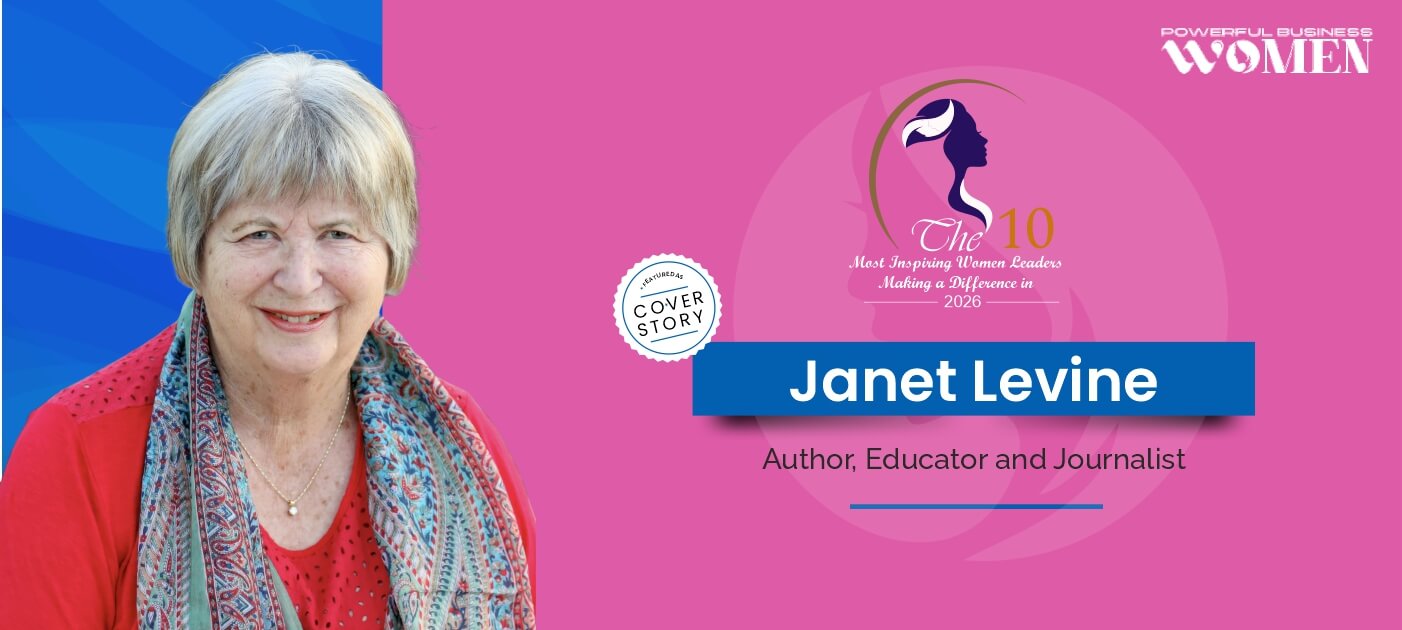
Few careers reflect that connection as distinctly as that of Janet Levine, an author, educator and journalist whose work has consistently explored the relationship between people, ideas and the systems that shape their lives. Born in South Africa, Janet brings a perspective shaped by personal experience as well as years of intellectual inquiry. Her political memoir, Inside Apartheid, offers an especially uncommon account of South Africa’s apartheid era, recounting the repression and struggles of that period from the perspective of a white woman who worked within the system while also seeking to challenge and transform it.
That willingness to look closely at difficult subjects has carried through much of Janet’s work. As an author, she has explored human behaviour, identity, education, relationships, and the forces that shape individual lives in books including Inside Apartheid, The Enneagram Intelligences, Know Your Parenting Personality, and her historical novel Liv’s Secrets. Published almost 40 years after Inside Apartheid, Liv’s Secrets can be seen as a literary bookend to her earlier work, returning to the history of South Africa through the intimate lens of a multigenerational family living through the country’s transformation and the rise of apartheid.
The novel has also struck a strong chord with readers, earning a 4.89/5 rating on Goodreads, where reviews praise its immersive historical setting, emotional depth, and nuanced exploration of identity, resistance, and moral responsibility. Together, these works reflect Janet’s ability to bring complex social and human questions into accessible, deeply personal narratives. Her writing brings together ideas that can sometimes feel academic or complex and connects them with the realities of everyday human experience.
Education has been another defining part of that journey. For three decades, Janet taught at Milton Academy in Massachusetts, working with hundreds of students and helping shape the thinking of young people who were among the brightest in the United States. The classroom became more than a place to pass on knowledge. It was a space for questions, discovery and the kind of intellectual engagement that can stay with a person long after formal education ends.
Her work as a journalist and commentator has extended that same curiosity into the public sphere. Across her writing and professional life, Janet has continued to examine how people understand themselves, how societies shape individuals and how difficult truths can be brought into the open.
What makes her story particularly compelling is that it has never been confined to one discipline. Education, literature, journalism, psychology and lived experience have continually informed one another. Beneath them all is a desire to understand, to question and, ultimately, to bear witness to the world as honestly as possible.
A Leader Before She Had the Title
Some people grow into leadership. Janet seemed to discover it naturally. As a school student, she had no fear of public speaking and genuinely enjoyed being in front of an audience. Each year in high school brought another opportunity to lead. She became a prefect, captain of teams and a debater, while her classmates naturally looked to her for direction. Adults recognized the same quality in her. She had an instinct for organization and an energy that made taking responsibility feel almost effortless.
Much later, Janet discovered the Enneagram and recognized herself in the profile of a Type Three. It described her drive and efficiency with striking accuracy. It also revealed a less comfortable truth. Being focused on achievement can make a person so committed to getting things done that they lose touch with simply being present.
Janet describes the danger clearly. Threes can become “human doings rather than human beings.” That realization became an important part of her personal evolution.
When Listening Became Leadership
The biggest shift in Janet’s understanding of leadership came when she stopped feeling that she always needed to be the person speaking. She learned to listen. Instead of standing far out in front while a reluctant team followed behind, Janet began leading from behind, bringing different ideas and perspectives together. Pulling the various inputs into a shared direction proved more effective than simply setting the course herself.
It was a change from commanding attention to creating space for others. That transition also brought a deeper understanding of leadership. Being heard matters, but knowing when to listen can matter even more. Janet’s journey from confident speaker to thoughtful listener gave her a more balanced way of working with people and leading them.
A Calling to Bear Witness
Today, Janet sees her work through another lens: that of a witness bearer. The meaning of that calling has changed over the years. Earlier in her life, truth telling could sometimes feel like a matter of defending herself or telling the truth simply because it needed to be told.
Now, the pursuit is deeper.
As a journalist, author and public figure, Janet sees seeking the truth as the heart of witness bearing. It is about getting to the core of a story and understanding what lies beneath it.
Her definition of making a difference has consequently moved beyond recognition or achievement. It is increasingly connected to what she can uncover, understand and leave behind for others.
Refusing to Become Smaller
Janet has known what it feels like to enter a room where she was the only woman.
Earlier in her career, being surrounded by men could itself be a barrier. Recognition brought another challenge. Even when women achieve and receive accolades, not everyone responds positively. Janet has encountered colleagues who became skeptical or resentful when she was acknowledged for her work.
None of this changed her belief in the importance of remaining true to herself. Her advice to women who feel pressured to conform is simple and enduring: be true to yourself. Self-belief, she says, is vital.
For Janet, that does not mean ignoring doubt or criticism. It means refusing to let either one dictate the size of the space you are willing to occupy.
A Life Measured Beyond One Achievement
Choosing a single milestone that matters most is almost impossible for Janet because her sense of achievement is tied to very different chapters of her life. Her work in South Africa stands among the most significant. She explores that period in her political memoir, Inside Apartheid, capturing experiences that became an important part of her personal and professional story.
Her family journey also remains deeply meaningful. When they emigrated from South Africa under difficult circumstances, Janet had to become a source of strength for those around her while finding her own footing in a new country. Believing in her truth and continuing along her chosen path required resilience.
She also became an early champion of the Enneagram when it was still relatively unknown.
Then there was teaching. For thirty years, Janet spent time in the classroom at Milton Academy in Massachusetts, influencing hundreds of students, many of them among the brightest young people in the United States. The impact of that work cannot easily be captured through numbers. Teachers often leave their greatest mark in ways that become visible only years later.
The Next Chapter Is About Balance
Janet’s ambitions have not disappeared, but they have changed shape. Her boldest aspiration now is a more balanced life, one that includes rest, exercise and healthier choices alongside meaningful work. After years of achievement and responsibility, she recognizes that a full life cannot be measured only by how much gets accomplished.
There are still stories waiting to be told. Janet’s latest novel, The Awakening of Diya Sharma, is now moving through the publication process and marks another evolution in her exploration of identity, consciousness, and self-discovery. The novel follows Diya Sharma, a woman in her forties and a biracial New York journalist, as her journey takes her deep into the Himalayas, where an encounter with psycho-spiritual realities leads her toward a profound discovery of her true self.
Expected to be available in January 2027, The Awakening of Diya Sharma reflects Janet’s continuing desire to explore the deeper dimensions of human experience through fiction. With another book also in progress, bringing these projects toward publication remains an important goal for the years ahead. The difference is that accomplishment no longer has to come at the expense of everything else.
Perseverance as a Way Forward
Perhaps the most powerful message Janet wants younger women to take from her story is also the simplest: ordinary people are capable of extraordinary acts in urgent times.
Her own journey reflects that belief. Leadership, professional challenges, migration, teaching, writing and the pursuit of truth have all demanded different forms of courage. She does not present perseverance as something reserved for exceptional people. It is something ordinary people can choose when circumstances require it.
Believe in yourself. Keep going.
After a lifetime of stepping forward, learning to listen, standing by her convictions and finding meaning in the lives she has touched, Janet’s story comes back to that essential idea. Leadership is not only about being the person at the front. Sometimes it is about listening carefully, sometimes about standing firm, and sometimes simply about having the courage to continue on your own path.