

There is a quiet crisis that rarely makes headlines. It lives in middle school hallways, in homes where instability competes with homework, in communities where talent is abundant but access is not. Education systems often ask students to show up ready; ready to learn, ready to focus, ready to perform. Yet many arrive carrying burdens that no curriculum addresses.
For decades, schools have been designed to deliver instruction. Fewer have been designed to respond to the whole human being sitting at the desk. Mental health, healthcare access, housing insecurity, family instability; these are treated as external factors, unfortunate but separate. The result is predictable. Students slip through cracks that were never meant to hold them.
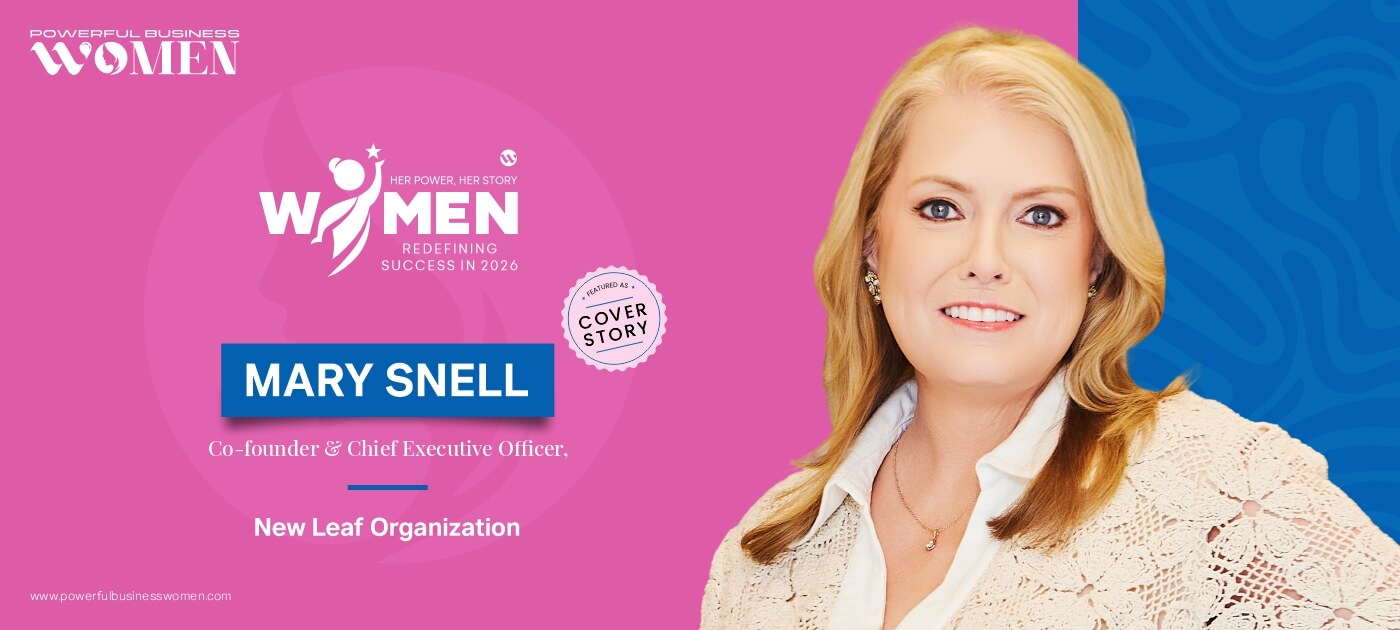
Mary Snell saw those cracks up close. Today, as Co-Founder and Chief Executive Officer of New Leaf Organization, she is rebuilding what school can mean.
The Girl Who Remembered
Mary’s leadership did not begin with a title. It began in middle school, in a season where she felt lost and overlooked.
Her parents had already planted something steady within her. They instilled the belief that hard work is never optional. But effort alone does not shield a young person from feeling invisible. That memory stayed with her.
“I remember feeling lost and overlooked in middle school, uncertain of where I belonged. When I look into the faces of our students today, I see that same longing for connection and support.”
That recognition became the moral compass for New Leaf. She does not see statistics when she looks at her students; she sees versions of her younger self. The change her organization creates is rooted in that memory.
Service Is Not an Activity
Beyond her title, Mary describes herself with a clarity that feels intentional rather than polished.
“At my core, I am grounded in mindfulness and reflection. I make space for journaling, reading, and music as ways to listen to myself and to the world around me. I’m shaped by grit and curiosity, drawn to travel and nature because they remind me how much there is to learn and appreciate. I am rooted in my loved ones, my community, and those I serve. Service isn’t something I do, it’s who I am.”
That posture of reflection influences how she leads. She listens first; to students, to families, to communities. Leadership, in her view, is less about volume and more about alignment. Vision must be tethered to human need.
Redefining Success
For Mary, success has never been about recognition.
“Success, to me, is witnessing the ongoing transformation of our students. It has never been about accolades or recognition. True success is seeing more graduates beyond the 5,500 who have already crossed the stage, and knowing their lives were changed because we listened and responded to their needs.”
More than 5,500 graduates have walked across the stage through New Leaf’s schools. This year alone, over 3,000 students are enrolled across its seven campuses. What began as the goal of opening a single school has grown into a system that is strengthening communities.
Her definition of success has evolved. Growth is no longer optional; it is necessary to deepen impact. Scaling, for her, is not expansion for its own sake. It is a commitment to reach more students who would otherwise be overlooked.
The Turning Point: Trusting the Unconventional
Early in her education career, Mary was given significant responsibility. The assignment was demanding, but it also revealed possibility.
“The turning point for me came early in my education career. I was tasked with significant responsibilities and quickly recognized the opportunity to create lasting change in education.”
She did not come from a conventional leadership path. That could have been a reason to hesitate. Instead, it became fuel.
“I know everyone’s voice matters and leadership isn’t defined by a traditional title or path. Because I didn’t have the conventional experience, didn’t mean I didn’t have a vision or a plan that could truly serve students. I had to learn to trust my instincts and my abilities, and to recognize that resistance often signals meaningful progress.”
Resistance became confirmation. If the idea unsettled the system, it was probably worth pursuing.
Building Schools Around Human Needs
One of the most debated aspects of New Leaf’s model was also its defining feature. Mary embedded wraparound services directly into the educational experience. Mental health counseling, healthcare access, housing support, family services; all part of the school ecosystem.
“The biggest barrier I have had to overcome was hearing ‘no’ to an idea, simply because it was unconventional. Human needs are at the core of what we do and having wraparound services directly embedded into the educational experience was often met with skepticism.”
Some critics argued that schools should focus strictly on academics. Mary disagreed.
“Some saw our inclusion of mental health counseling, healthcare access, housing support, and family services as doing things wrong, rather than giving students access to what they need to thrive.”
She had to unlearn the limits others tried to place on her thinking.
“I’ve had to unlearn the limits others tried to place on me and relearn how to see possibility. Where some see a dead end, I see fertile ground. This work has helped me claim my purpose and it’s why I continue to push forward.”
Her approach reframes education as a comprehensive support system, not a narrow delivery mechanism.
Community as Co-Architect
Mary’s proudest milestones are measured in impact, not scale.
“The most meaningful milestone is our 5,500 graduates and the more than 3,000 students enrolled in our schools so far this year. I’m equally grateful for the unwavering support our communities have shown our students along the way.”
From the beginning, she prioritized relationships with local businesses, nonprofits, and civic leaders. Not as a tactic, but as a commitment. Those relationships opened doors to meaningful work opportunities and expanded what learning could look like.
Through farm-to-table initiatives such as school-based greenhouses and grow towers, students learn entrepreneurship and healthy living while directly serving their communities. An automotive training program offers real-world skills and a direct bridge to employment. Expansion plans include boutique services, healthcare, and the arts.
Education, in this model, is connected to local economies and real opportunities. Students are not only learning; they are contributing.
No Shrinking in Leadership
Mary’s message to women in leadership is direct.
“There is no space for shrinking in leadership. When you stay grounded in service and focused on real impact, your work will speak louder than any doubt or expectation placed on you.”
She encourages women to build strong circles both personally and professionally, surrounded by those who share their commitment to meaningful work.
“Know that you have purpose, perspective, and something meaningful to contribute.”
For her, leadership is not about fitting into an existing mold.
“Women bring lived experience, empathy, and a collaborative approach that strengthens organizations and communities alike. Our presence reinforces the truth that leadership is not about fitting a mold, but about bringing your full self to the work and using it to create meaningful change.”
Courage Paired with Compassion
On International Women’s Day 2026, her message is rooted in conviction.
“I want women to know our voice matters and our perspective is needed. I have learned that real progress happens when we align vision with service, and courage with compassion. Trust your instincts, even when they challenge convention.”
She believes that meaningful innovation often begins with questioning established norms.
“Some of the most meaningful innovations come from questioning how things have always been done and imagining what they could be. When women lead with authenticity and purpose, we don’t just change organizations, we change communities and futures.”
A Blueprint Beyond Ohio
Mary’s ambition for the next chapter is bold and practical at the same time.
“My boldest aspiration is to turn New Leaf’s journey into a clear, replicable blueprint that other schools can follow. I want to document not just what we built, but how and why, so that communities facing similar challenges can meet their own students’ needs.”
If even one more student gains access to a genuine support system because of that blueprint, she believes the impact of New Leaf will stretch far beyond Ohio.
Leadership Before the Title
When asked how she hopes her story inspires young women, her answer returns to the beginning.
“I hope my story shows young women that leadership begins long before a title ever does. It begins with listening deeply, building authentic relationships, and allowing empathy to guide decisions. I believe in ‘lifting as we climb.’ When you move forward in your purpose, you open doors for others and help shape a future where more women feel seen, heard, and empowered.”
Mary Snell’s work challenges a long-held assumption about education; that schools are merely academic institutions. Under her leadership, they are ecosystems of care, engines of opportunity, and bridges between potential and possibility.
Her power is not loud. It is steady. It listens first, builds patiently, and refuses to accept that unconventional means impossible.
And for thousands of students who once felt lost and overlooked, that steadiness has made all the difference.