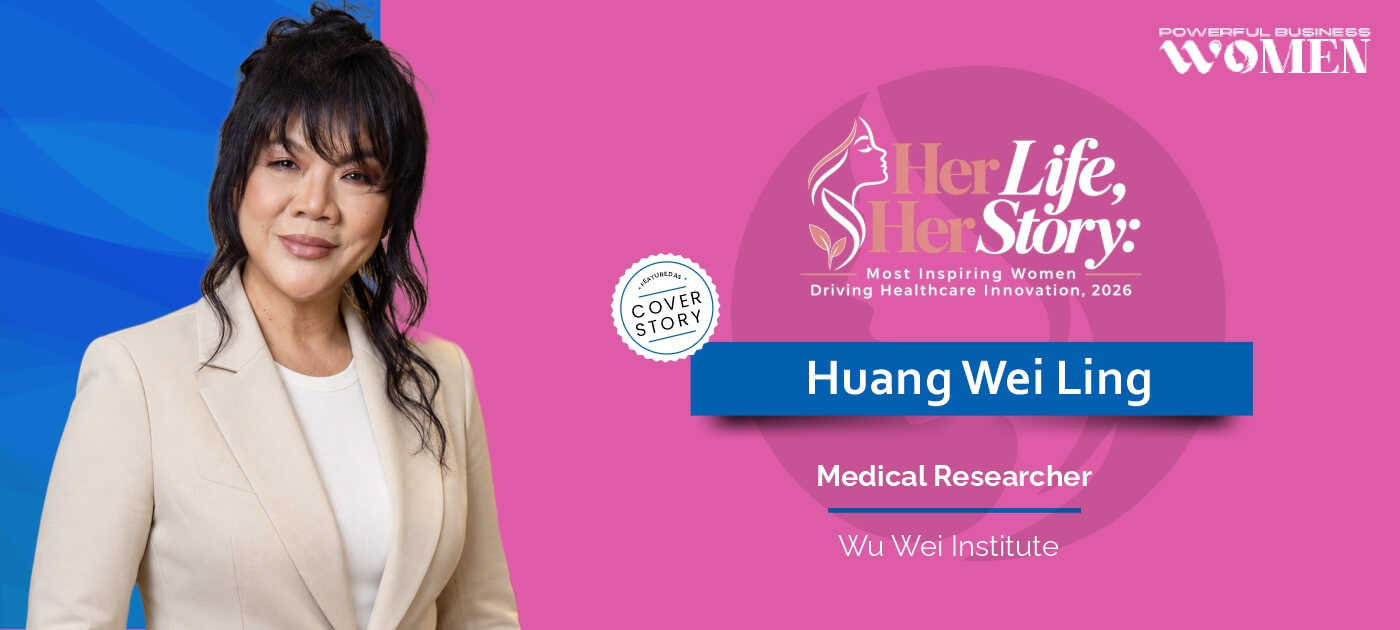

Healthcare has always been shaped by the search for better ways to understand the human body and help people live healthier lives. As medical knowledge continues to expand, the conversation around health is also moving beyond conventional treatments toward approaches that consider nutrition, lifestyle, prevention, and the connections between different aspects of human well-being. This evolving space has created room for practitioners who are willing to look at familiar problems from a different perspective.
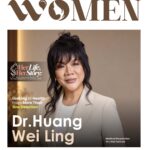
Among those voices is Dr. Huang Wei Ling, a renowned researcher in Traditional Chinese Medicine (TCM), with a practice centred on acupuncture, homeopathy, and integrative medicine. Her professional journey has been shaped by an unusual blend of Eastern and Western medical knowledge, supported by multiple degrees, certifications, clinical experience, and research work. She has worked with respected medical institutions and participated in clinical research exploring holistic approaches to health.
What makes her journey particularly distinctive is the way curiosity has remained at the centre of her work. Rather than viewing medicine as a collection of separate disciplines, Dr. Huang has spent years exploring how different schools of thought can contribute to a broader understanding of health. Her experience across conventional and traditional practices has given her a perspective shaped as much by observation and questioning as by formal medical training.
Today, her work reflects that continuing search for answers. Through her research, clinical practice, and the development of the Wu Wei Protocol, she is pursuing an approach to healthcare that looks beyond immediate symptoms and considers the deeper factors she believes influence human well-being. Her story is ultimately one of curiosity, persistence, and the willingness to keep asking questions when familiar answers no longer seem sufficient.
Where Curiosity First Became a Calling
Every woman leader has a beginning. Dr. Huang Wei Ling’s began with a quiet desire to alleviate human suffering and a fascination with the role of nutrition in healing.
During her adolescence, an encyclopedia at home introduced her to the subject through a volume dedicated to nutrition. The teachings stayed with her and planted an early ambition to understand how proper nutrition could become part of the treatment process. The philosophy of Hippocrates, the father of medicine, that food should serve as medicine and medicine as food, became particularly meaningful to her.
Her entry into medicine brought a very different kind of learning. Specializing in Infectious and Parasitic Diseases placed her in a demanding, high-stakes environment where hospital infections and complex epidemics required discipline, clinical precision, and a strong work ethic.
Nutrition, however, remained close to her interests. During her residency, she would visit the intensive care unit to calculate the energy expenditure of intubated, bedridden patients. The approach helped shorten hospital stays and reduce complications. In the infectious disease ward, she applied the same thinking to patients with conditions such as tetanus, using tube feeding rather than relying solely on intravenous fluids and helping prevent severe hospital-acquired malnutrition.
What shaped her most, though, was what she saw beyond individual cases. Patients often moved through standard treatments that addressed immediate symptoms while deeper, chronic problems remained. It led her to a pivotal realization: meaningful leadership requires the courage to look beyond established medical frameworks.
Her early years in Western medicine therefore did more than shape her as a physician. They developed a pioneering spirit and a willingness to question conventional approaches in search of deeper solutions.
She credits much of this journey to her mother. In 1996, shortly after completing her medical residency in infectious diseases, her mother encouraged her to study Traditional Chinese Medicine, telling her that it could become one of the medical systems capable of treating people in the future. Nearly three decades later, Dr. Huang sees that advice in a new light.
By bringing together theories and knowledge from different periods of medicine, she began developing approaches she believed could address the increasingly complex cases faced by patients today. In her view, modern medicine has created a gap between what patients need and what current scientific frameworks recognize, particularly because the energetic dimension of human health received far less attention.
Her work has grown from that gap. Rather than looking only at the symptoms created by energetic imbalances, she seeks to understand those imbalances before they develop into disease.
Beyond the Degrees, a Seeker of Truth
Beyond medical degrees, research papers, and global recognition, Dr. Huang Wei Ling describes herself simply as a seeker of truth, a bridge builder, and a protector of vitality.
She sees life through a lens of interconnectedness and believes that nature carries an inherent balance. Her purpose, as she understands it, is to help people move closer to that harmony.
Curiosity sits at the heart of her approach. She is not comfortable with superficial answers and does not view a patient merely through symptoms or a clinical diagnosis. Instead, she looks at the deeper changes that may have developed over years before becoming an established disease.
That perspective is closely connected to her empathy. She believes in listening to the quieter signals of the body, including aspects of health that she feels conventional science may overlook.
Ultimately, her work is rooted in restoring what she describes as the invisible foundations of health. She views true healing as nutritional, emotional, physical, and spiritual.
She has also become increasingly concerned about the influence of modern communication technologies. In her research and observations, she has explored how 4G and 5G electromagnetic waves may affect the energy of internal organs. She considers this part of a new planetary phase that deserves greater attention and believes it remains insufficiently recognized within modern Western medicine.
Rethinking What Healthcare Innovation Really Means
Healthcare innovation once meant the arrival of a new synthetic drug, a more sophisticated surgical instrument, or increasingly advanced digital monitoring. Dr. Huang Wei Ling’s understanding of innovation has changed considerably since then.
In 2026, she sees genuine innovation less as adding complexity and more as finding elegant simplicity. Her approach centres on returning to root-cause medicine while connecting ancient, time-tested medical knowledge with modern scientific parameters.
The Wu Wei Protocol reflects this philosophy. Through its creation and expansion, she has sought to explore the energetic system of the human body as part of an approach to chronic illness.
In a healthcare environment surrounded by high-concentration medications and growing environmental stressors, she believes one of the most meaningful forms of innovation is to support the body’s own capacity for healing rather than focusing only on suppressing symptoms.
Her larger vision is a shift from a healthcare model focused primarily on managing chronic disease toward one that is proactive and regenerative, while giving greater attention to human biophysics.
When Patients Turned Doubt into Conviction
Dr. Huang Wei Ling’s shift from self-doubt to conviction came through an unexpected direction in her medical journey. In the late 1990s, she began integrating Traditional Chinese Medicine and Acupuncture into her practice. Coming from a conventional Western background in Infectology, entering the world of energy medicine meant stepping into territory that was unfamiliar and often heavily criticized. Skepticism from colleagues and the established medical community became part of the journey.
Her patients eventually became the turning point. She began applying energetic replenishment protocols to people who had been considered “incurable” under standard medical guidelines, including individuals living with chronic pain, severe autoimmune conditions, debilitating fatigue, and other diseases regarded as incurable by modern Western medicine. In her view, Western medicine often focuses on the material aspects of the body, while the Wu Wei Protocol seeks to address what she considers missing elements in the recovery process by working with the body’s own internal resources.
The clinical results she observed, together with the gratitude of patients who experienced improvements, gradually gave her a stronger sense of purpose and authority. She realized that the work could not remain confined to her clinic when thousands of people were still searching for answers to difficult health problems.
She believes part of the challenge lies in applying therapeutic approaches developed before the widespread energy changes associated, in her view, with modern electromagnetic environments. Her argument is that changing human conditions require new approaches to be considered alongside existing medical methods.
That conviction transformed her relationship with doubt. What began as a controversial direction in her practice became a mission she wanted to take to a much wider audience.
Breaking the Barriers Outside and Within
The journey of a pioneering woman in medicine has required Dr. Huang Wei Ling to confront more than one kind of bias. She has navigated the challenges of being a woman in a historically patriarchal profession while also advocating integrative therapies within a Western medical system built largely around conventional scientific frameworks.
Breaking through the glass ceiling demanded excellence, consistency, and clinical reproducibility. These became essential as she worked to establish her voice on international medical platforms.
Yet the barrier that took the longest to unlearn was not outside her. It was the belief, shaped by years of rigorous medical education, that Western medicine represented the only complete authority on health.
Her training had taught her to understand the human body primarily as a biochemical machine. Moving beyond that reductionist view required humility and a willingness to consider the body as an intricate energetic system. She had to stop looking only at the visible “branches” of disease and become more open to what she describes as the invisible “roots” explored by ancient healing systems.
That process continues. The more she studies, she says, the more aware she becomes of how much remains unknown. The universe is vast, complex, and full of discoveries yet to be made. She recalls the words attributed to Hippocrates, who observed that a single lifetime is too short to know everything that exists in such an immense and mysterious universe.
Never Shrink to Fit the Room
Dr. Huang Wei Ling’s advice to women is straightforward: their individuality should never become something they feel compelled to hide. She believes a woman’s unique perspective is not a weakness but a powerful advantage. Leadership does not require women to imitate traditional, hyper-masculine models of authority or silence their intuition to fit an established structure.
The world is facing increasingly complex challenges, particularly in healthcare, and she believes those challenges require different ways of thinking. Women bring perspectives shaped by empathy, holistic thinking, and an ability to connect seemingly separate pieces of a larger problem. If a leadership environment demands that a woman constantly conform, she believes the environment itself may need to change.
Her message is to remain grounded in personal truth, support ideas with genuine competence, and speak with the confidence that comes from lived experience. Authentic leadership, in her view, does more than create space for one person. It can widen that space for those who come next.
The Victories That Never Make Headlines
Presenting research at hundreds of global conferences and securing international patents for the Wu Wei Protocol represent important milestones in Dr. Huang Wei Ling’s journey. Yet neither compares with what she describes as the quiet revolution taking place inside her clinic every day.
It happens when a patient who has spent years dealing with complex treatments and persistent suffering finally feels a sense of relief. Sometimes it is the ability to sleep again, walk without pain, or live without constant anxiety. Those moments, often accompanied by tears, carry a meaning that no professional recognition can match.
She thinks particularly of a mother who can move beyond chronic illness and return to raising her children, or an elderly patient who regains independence and dignity. These victories rarely make headlines. Yet to Dr. Huang, they capture the heart of medicine.
Knowing that a methodology developed through decades of observation has helped restore quality of life for thousands of individuals remains her most treasured milestone. Each person represents a different story, a different struggle, and a different reason to keep pursuing the work.
Building the Medicine of the Future
Dr. Huang Wei Ling’s boldest aspiration is to see the Wu Wei Protocol formally integrated into medical curricula and hospital systems around the world. Through the Wu Wei Institute, she wants to make integrative medicine more understandable and accessible while preparing a new generation of physicians to consider what she describes as the energetic roots of chronic illness alongside modern diagnostics.
Her vision is of a healthcare system where patients are viewed as whole individuals, with their energetic, emotional, and physical dimensions considered together. She hopes such an approach can reduce dependence on lifelong, highly concentrated medications where appropriate.
She is working to establish the methodology as a pillar of what she calls the “Medicine of the Future,” supported by an enduring and scalable infrastructure capable of reaching diverse populations.
At the heart of that ambition is accessibility. She wants the approach to move beyond economic and geographical barriers so that opportunities for deeper, root-cause healing are available to people across different communities and parts of the world.
A Journey Meant to Open Doors
Dr. Huang Wei Ling hopes her story reminds young women that challenging an established system is possible when conviction is matched by dedication, truth, and love for the work. She wants them to understand that many boundaries are not as permanent as they appear. A person can begin in a traditional and highly structured profession, remain true to personal values, and still create a new direction within that field.
To her, leadership is not about waiting for permission. It begins with having a vision and finding the courage to take the first step into unfamiliar territory.
Her own journey, from infectious disease specialist to founder of a patented medical methodology, reflects the kind of path she wants young women to believe is possible.
Above all, she hopes they will trust their unconventional ideas, pursue the questions that matter to them, and recognize their own ability to influence what comes next.