

The mental health crisis continues to exact a staggering toll on organizations worldwide. Traditional employee assistance programs often fail to connect people with meaningful support, leaving gaps between access and actual care. Meanwhile, the race to compete on price has created a marketplace where quality and human connection frequently take a backseat to cost efficiency. Against this backdrop, leaders who choose to prioritize people over profit margins stand out—not as idealists, but as strategic visionaries who understand that sustainable success requires a different approach.
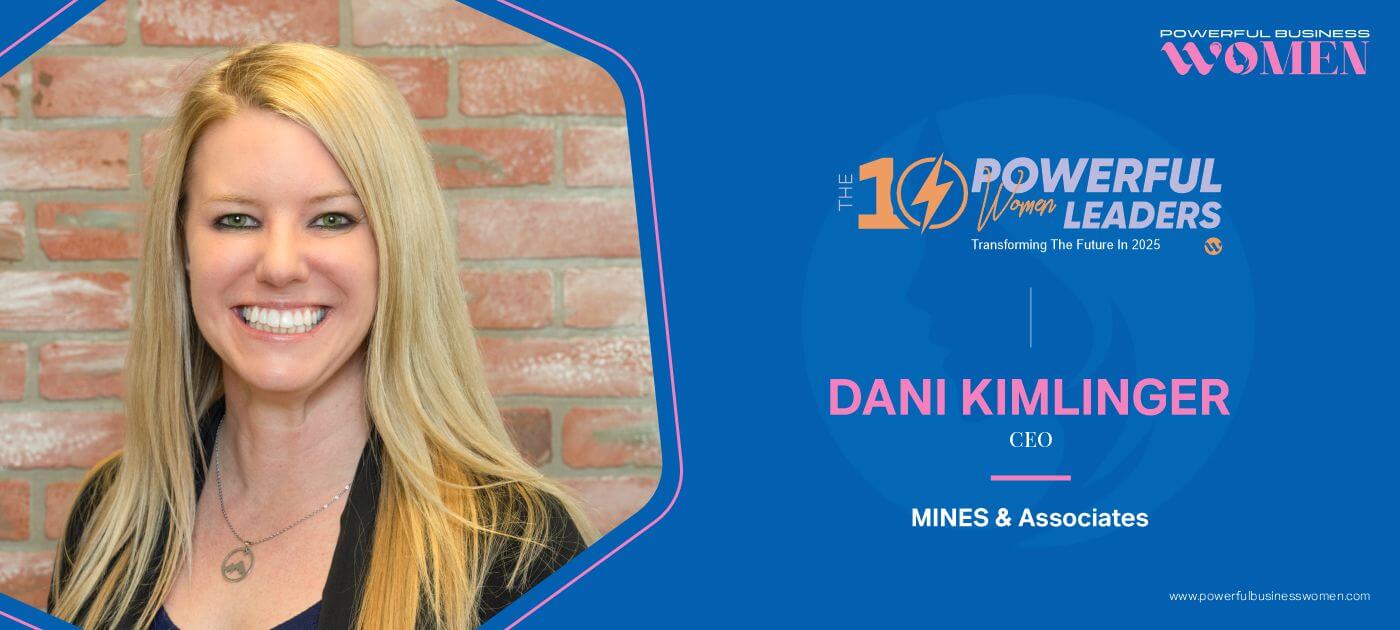
Dani Kimlinger, CEO of MINES and Associates, is one such leader. Her journey from a childhood marked by mental health challenges, substance use, and financial hardship to the helm of a global behavioral health organization reveals the power of lived experience in shaping transformational leadership.
From Invisible to Unstoppable
Kimlinger’s path to leadership wasn’t paved with privilege or connections. Growing up in a family that “seemed to fall through the cracks of the system,” she carried shame alongside a burning determination to ensure others wouldn’t feel the same invisibility. “Those early experiences gave me a passion for breaking down barriers to care and creating access where none exists,” she reflects. “I wanted to make sure others didn’t feel invisible or unsupported the way I sometimes did.”
That commitment to equity, access, and human dignity became her compass. But translating personal pain into professional purpose required more than passion—it demanded a fundamental shift in how she viewed herself and her capabilities.
Rewriting the Leadership Script
Without leadership role models or resources, Kimlinger found herself battling imposter syndrome and a scarcity mindset that made her cautious and risk-averse. The turning point came when she recognized that transformational leadership requires courage. “I had to intentionally shift from seeing constraints to seeing possibilities,” she explains. “I’ve built a trusted circle of advisors and colleagues who challenge me to think bigger and take calculated risks.”
This evolution in thinking prepared her for what would become the defining moment of her career: stepping into the role of CEO at MINES and Associates. The transition demanded a complete recalibration. “It required that I shift from being a contributor to being the architect of an organization’s future,” Kimlinger says. As CEO, she found herself entrusted not only with employee livelihoods but with shaping the organization’s entire strategic vision and culture.
Her approach reveals a sophisticated understanding of her own strengths and limitations. “I thrive in strategy and big-picture thinking, envisioning where the organization must go and how we will get there,” she notes. “At the same time, I’ve learned to surround myself with leaders who excel at operational excellence and execution. That balance allows us to innovate boldly while remaining disciplined in delivery.”
Choosing Values Over Valuation
Leading MINES and Associates means operating at the intersection of health psychology and organizational psychology—creating impact at both individual and systemic levels. The company’s Health Psychology Division delivers international Employee Assistance Programs, managed behavioral healthcare, crisis response, and digital therapy. Its Organizational Psychology Division partners with companies on culture, leadership development, and workforce strategy.
But what truly distinguishes MINES is a decision that runs counter to industry trends. While competitors backed by private equity and venture capital rush to scale and compete on price, Kimlinger made a deliberate choice: remain independent and values-driven. “We’ve made the deliberate choice not to take outside funding at this time, because we want the freedom to prioritize connection, quality, and outcomes over short-term financial pressures,” she explains.
This means offering a comprehensive model that includes organizational psychology consulting, leadership coaching, mindfulness programs, and integrated digital tools—all touched by human connection. “We don’t see people as cases or checkboxes, we ensure they are connected to real services, in real time,” Kimlinger emphasizes. “Access is not a tagline for us; it’s a mandate.”
The approach impacts pricing, but Kimlinger stands firm. The decision to stay independent has shaped MINES’ identity as a trusted partner that organizations can rely on for care that is accessible, high-quality, and deeply human.
Leading With Empathy as Strategy
Kimlinger’s leadership philosophy centers on removing barriers and providing resources so people can succeed. For women in particular, she sees her role extending beyond mentorship. “It’s not enough to mentor, I actively work to open doors, create opportunities, and amplify women’s voices,” she says.
Her advice to aspiring women leaders is direct: “Own your leadership on your terms.” She challenges the outdated models that prioritize dominance over empathy. “Bring your full self to the table. If you lead with empathy, own it. If you are direct and bold, own that too. Don’t shrink yourself to fit a mold, expand the mold.”
When it comes to debunking myths about women in leadership, Kimlinger takes aim at the most damaging one: that strength equals masculinity. “I reject the idea that toughness means stripping away empathy,” she states. “Strength is about clarity, resilience, and the ability to make courageous decisions under pressure.” Women leaders embody both empathy and decisiveness—and that duality, she insists, is not weakness but a competitive advantage.
The Starfish Philosophy
Ask Kimlinger about legacy, and she returns to a simple story her business partner often shares: the little girl throwing starfish back into the ocean, making a difference one at a time. “That’s how I view leadership,” she says. “If my career and life make a difference for even one person, if I open doors or change the trajectory for someone else, then I’ve succeeded.”
It’s a humble vision for someone leading a global organization. But it reveals the through-line of Kimlinger’s entire journey: leadership isn’t about how high you climb, but how many hands you reach for on the way up. From the invisible child in a struggling family to the CEO reshaping workplace wellbeing, she’s proven that the greatest barriers we break are often the ones we build for others to walk through.