
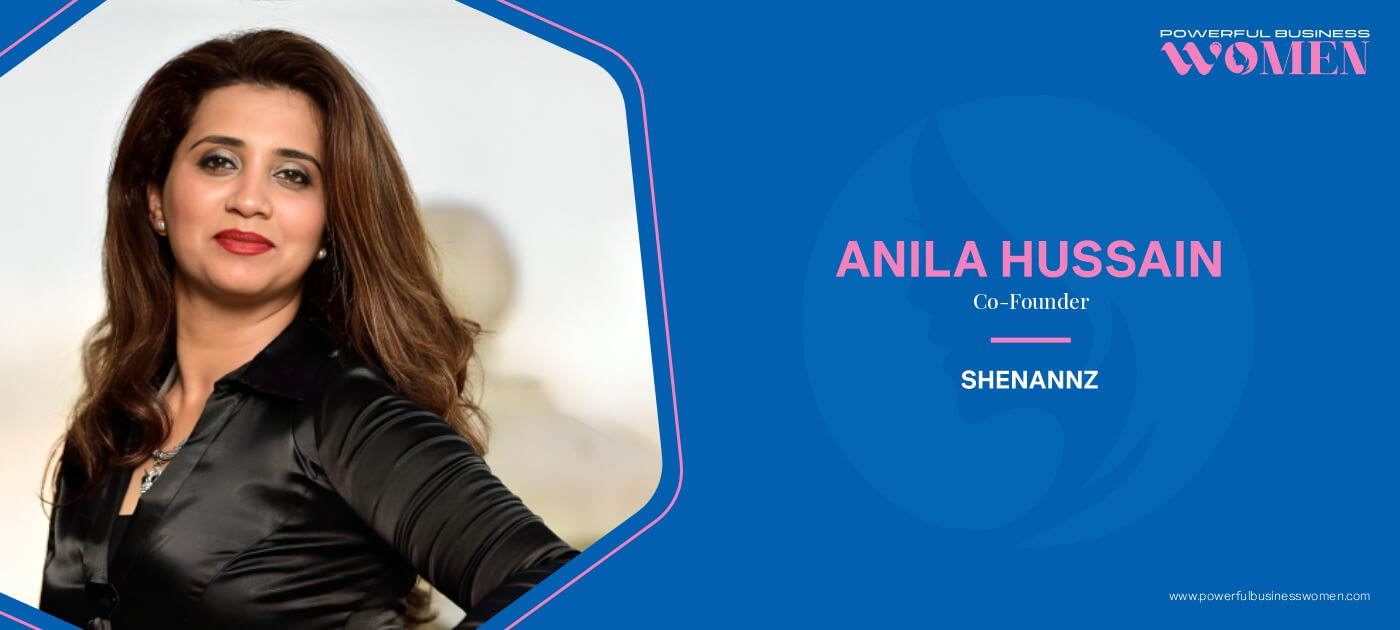

Leadership literature loves binaries. East versus West. Tradition versus progress. Compassion versus strategy. Ambition versus empathy. The framework suggests you must choose; that success requires sacrifice, that authenticity and advancement can’t coexist, that you either preserve your roots or reach for new ground.
Anila Hussain’s entire career is proof that these are false choices. For over two decades, she has built a body of work that refuses such reductions. The work that is simultaneously rooted in Eastern values and shaped by Western systems, driven by business acumen and guided by spiritual principles, focused on individual empowerment while advancing collective progress. Born and raised in Karachi, Pakistan, Hussain grew up in a city where contrasts weren’t theoretical. They were lived daily. Opportunity was not equally accessible, especially for girls, yet her family instilled in her a foundation of education, discipline, and integrity. Her first meaningful lessons, however, came not from books but from gymnastics. Competing at the national level in spaces where girls were not expected to excel, she learned what resilience actually meant: how to fall, rise, and try again. Those formative years taught her that excellence doesn’t require conformity, and that showing up fully as yourself is not a liability but a strategic advantage.
Today, Hussain is a Pan American and AMI Montessori educator, a social entrepreneur, and a global advocate. She co-founded SHENANNZ, an international fashion brand creating sustainable livelihoods for women, and leads the G100 Global Business Networking Wing, fostering collaboration across borders. With over 24 years in Geneva, she has built a life that balances education with entrepreneurship, Eastern traditions with Western systems, and personal ambition with collective impact. She also serves as a Global Goodwill Ambassador for Switzerland and Pakistan, working on child abuse prevention and body safety education in communities where such conversations are difficult but essential.
The Belief That Shapes Everything
At the core of Hussain’s work is a belief system that refuses to separate personal values from professional practice. As a Bahá’í, her worldview is shaped by principles that see humanity as “a mine rich in gems, waiting to be discovered, nurtured, and uplifted through education, dignity, and unity.” But even having experienced discrimination as a woman, she holds another conviction with equal force: “Like the two wings of a bird, humanity cannot fly without the balance and strength of both.”
These aren’t platitudes for Hussain. They’re operational principles that guide her work as a mother, educator, and bridge-builder. They shape her commitment to creating spaces where potential is recognized, voices are valued, and individuals feel safe to grow into their fullest selves. It’s this orientation toward protection, empowerment, and long-term impact, that makes her leadership distinct.
When Self-Doubt Meets Self-Recognition
For many women leaders, there’s a singular, crystallizing moment when self-doubt shifts to self-belief. For Hussain, it was different. There was no dramatic turning point, but rather a gradual recognition that unfolded across years and continents.
The shift began when she moved to Geneva in 2002 and trained as an international AMI Montessori educator. Through that experience, she encountered a philosophical approach to education rooted in respect, independence, and empowerment. These principles fundamentally reshaped how she viewed leadership, learning, and human potential. This understanding expanded further when she co-founded SHENANNZ, a unique women’s platform working in fashion. It was there that something clicked.
“Working in fashion allowed me to recognize that blending my Eastern heritage with Western structures was not a weakness, but a profound strength,” Hussain reflects. “It gave me a distinct voice, perspective, and purpose, both as a professional and as a human being.”
That realization became even more grounded when she stepped into global leadership spaces, particularly while serving as Global Chair of the Business Networking Wing at G100. There, she discovered something unexpected: she wasn’t alone in her uncertainty. Many women carried similar doubts. And she learned something crucial that true trust is not built through perfection, but through authenticity. Being genuinely real, aligned with one’s values and lived experience, proved far more powerful than striving to appear flawless.
Unlearning the Myth of Solo Leadership
Externally, Hussain has navigated cultural assumptions, gender bias, and the persistent perception that compassion-driven leadership is less strategic than traditional, male-dominated models. But internally, the most challenging barrier was different, and took the longest to unlearn.
“The most challenging barrier to unlearn was my own belief that I had to carry everything alone,” she admits.
Working with women across the world, particularly through trade initiatives such as SheTrades, taught her that collaboration multiplies impact. She witnessed how, when women work together, their collective strength amplifies outcomes far beyond what any individual effort could achieve. Asking for support, she learned, doesn’t weaken leadership. It strengthens it, making it more sustainable, inclusive, and impactful.
Success Redefined
Earlier in her life, Hussain measured success through achievement and visibility. Over time, through education, entrepreneurship, and advocacy, that understanding evolved. She came to realize that true success is not defined by what one accumulates, but by what one contributes, consciously, responsibly, and sustainably.
By 2026, her definition has crystallized: success means alignment, living in harmony with her Bahá’í values while remaining in service to humanity and useful to society. It means enabling others to stand on their own two feet with dignity and confidence. Whether through education, fashion, or global networks, it’s about creating pathways that empower individuals to thrive independently. Lasting impact, she believes, lies not in recognition, but in service offered with purpose, humility, and alignment with one’s values.
The Work That Matters Most
When asked which achievement feels most meaningful, Hussain doesn’t point to accolades or visibility. Instead, she points to the quiet work; the kind that protects before harm occurs, empowers before limitation sets in, and nurtures human potential long after the moment has passed.
The most meaningful work of her life has been rooted in protection and prevention. Serving as a Global Goodwill Ambassador allowed her to engage in child abuse prevention and body safety education across communities where such conversations are sensitive yet absolutely essential. Creating awareness in these spaces wasn’t always comfortable, but it was necessary and deeply purposeful.
Equally transformative has been her work in Montessori-led conscious parenting and education. Through training teachers, supporting parents, and walking alongside children, she has helped cultivate awareness, independence, and mutual respect from an early age. These impacts aren’t always immediately visible or celebrated, but they’re profound. They ripple outward into families, communities, and generations yet to come.
Advice Without Apology
For women who feel they must conform or shrink themselves to fit into leadership spaces, Hussain’s advice is direct and uncompromising.
“You do not need to shrink to belong,” she says. “Leadership does not require imitation, silence, or conformity. Your lived experiences, whether they are cultural, personal, or professional, are not obstacles; they are assets. Speak with clarity, not apology. When you choose authenticity over approval, you not only step fully into your own leadership, but you also quietly reshape the space for others to do the same.”
It’s counsel born from experience, not theory. From someone who has navigated both Eastern traditions and Western systems, who has balanced discipline with compassion, ambition with empathy, and individual achievement with collective progress.
The Message for 2026
On International Women’s Day 2026, Hussain’s message to women across the world is both simple and radical: Your story is enough. You do not have to arrive fully formed to begin. Honor your own pace and purpose. When women support each other without comparison, then leadership becomes collective. Our future will be shaped not by our imperfections but by our ability to act courageously with consistency and compassion.
It’s the kind of message that only someone who has walked the path can deliver; someone who understands that leadership can be human, that it’s possible to be ambitious without losing empathy, and successful without losing oneself. Someone who knows that young women don’t have to choose between values and visibility, that they can lead with both heart and clarity.
Rooted in the East and educated in the West, Anila Hussain’s mission has always been clear: to bridge cultures and advance gender equality through education, entrepreneurship, and conscious leadership. But perhaps her greatest contribution is this, showing that leadership doesn’t demand we become someone else. It asks only that we become more fully ourselves.