

The modern workplace is undergoing a profound shift. Organizations today are no longer judged solely by their financial performance or market share, but by the cultures they cultivate and the experiences they create for their people. Human Resources has moved far beyond administrative boundaries to become a central force in shaping business strategy, leadership effectiveness, and long-term resilience. In industries where operational excellence and innovation are critical, the ability to build strong, engaged, and adaptable teams has become a defining advantage.
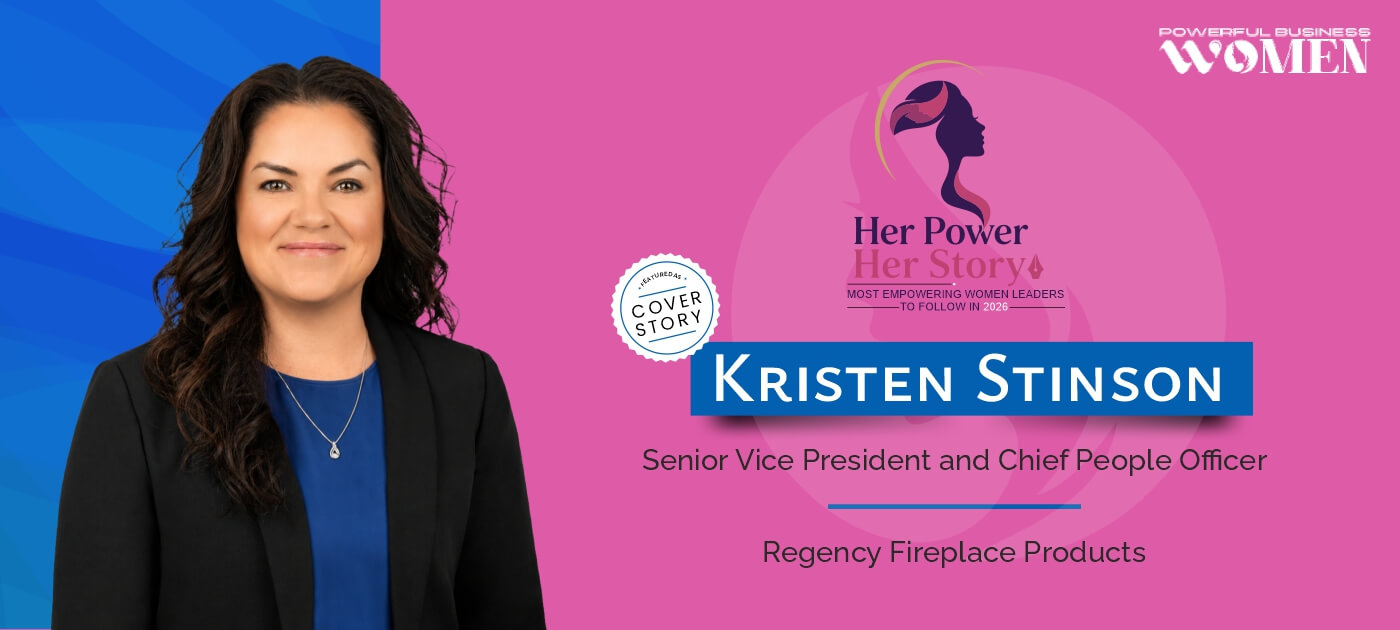
Within this evolving landscape, leaders who understand both the human and business dimensions of organizations are shaping the future of work in meaningful ways. Kristen Stinson stands among those leaders who have consistently brought clarity, empathy, and strategic insight into the organizations she has served. As Senior Vice President and Chief People Officer at Regency Fireplace Products, she plays a pivotal role in aligning people strategies with business goals, ensuring that culture and performance move forward together.
Her career reflects a steady progression through complex, people-focused roles across diverse industries. Before joining Regency Fireplace Products, she served as Vice President, Corporate Services at Conifex Timber, where she contributed to organizational strategy and operational leadership. Her earlier experience includes leadership roles with global and regional organizations such as BP, Tolko Industries, Finning, and the Interior Health Authority. Each chapter added a new dimension to her understanding of people, culture, and business dynamics.
Academically, Kristen has remained equally committed to growth. She holds a Master of Arts degree in Work, Organization, and Leadership as well as a Human Resources and Labour Relations, both from Athabasca University. This continued pursuit of knowledge reflects the same curiosity and discipline that define her leadership style.
Her journey is not simply a record of roles held, but a story of how thoughtful leadership can influence organizations from the inside out. By placing people at the center of strategy, she continues to help shape workplaces where individuals and businesses thrive together.
Shaping Organizations Through Culture and Strategy
Kristen has built her career on a belief that organizations succeed when their people do. Over three decades, her professional path has been guided by a consistent focus on culture, trust, and the human side of business. Early on, she saw Human Resources not as a function defined by rules, but as a discipline rooted in relationships and impact. That realization became the foundation for every step she took thereafter.
Her journey reflects a deliberate pursuit of roles that stretched both her strategic thinking and her connection with employees across all levels. She gravitated toward opportunities where she could influence not just operations, but the very fabric of workplace culture. Leadership roles followed naturally, allowing her to shape talent development, guide organizational growth, and strengthen the link between people and performance.
Her move to Regency Fireplace Products marked a defining chapter. The company’s commitment to innovation and its strong value system aligned closely with her own philosophy. It offered a platform where she could bring together analytical thinking and a people-centered approach in meaningful ways.
A defining thread throughout her career has been curiosity. She has consistently leaned into asking better questions, understanding underlying challenges, and making decisions that combine data with empathy. That mindset not only shaped her leadership style but also opened doors to broader influence, including her role on the Executive Health and Safety Council of British Columbia, where workplace wellbeing takes center stage.
Where Empathy Meets Decisiveness
Kristen’s leadership approach stands apart for its balance. She leads with a people-first mindset, yet remains firmly anchored in accountability and results. Collaboration sits at the core of how she works, creating environments where individuals feel respected, heard, and motivated to contribute.
Her style reflects a shift away from traditional command-driven leadership. Influence, adaptability, and trust define how she engages with teams. She understands that strong outcomes emerge when people feel empowered, not directed.
What distinguishes her further is her ability to hold two truths at once. She values empathy deeply, paying close attention to employee experiences and perspectives. At the same time, she does not shy away from making tough decisions or addressing complex issues directly.
Relationships matter, but so does performance. She believes effective leadership requires both.
In a time when employees seek authenticity and purpose, she prioritizes transparency and honest communication. Her leadership is not about maintaining authority, but about building trust and creating space for growth.
Principles That Anchor Her Approach to HR
Three core principles have consistently guided Kristen’s work in people management: trust, clarity, and continuous improvement. Trust forms the foundation. She sees it as something earned through consistent behavior, fairness, and transparency. Without it, even the most well-designed strategies struggle to succeed. With it, organizations can build resilient and engaged cultures.
Clarity follows closely. Whether navigating change or defining expectations, she believes people perform at their best when they understand the reasoning behind decisions. Communication, in her view, is not just about sharing information but about building alignment.
Continuous improvement completes the framework. She recognizes that organizations and workforce expectations are constantly evolving. Staying effective requires listening, learning, and adapting. Data plays a role, but so does feedback and a willingness to challenge existing assumptions.
Her success lies in blending human understanding with business acumen. HR, in her hands, becomes both a strategic driver and a cultural anchor.
Facing Barriers and Breaking Expectations
Kristen’s journey has not been without obstacles. Like many women in leadership, she has encountered moments where her expertise required additional validation or where her leadership style did not fit traditional expectations. Collaborative and empathetic approaches have, at times, been underestimated despite their effectiveness.
She addressed these challenges by staying grounded in results and consistency. Preparation, sound judgment, and integrity became her tools for building credibility. Over time, she learned the importance of speaking up, even when it felt uncomfortable, and ensuring her voice carried weight in critical conversations.
Another challenge came in balancing high performance with personal wellbeing. Experience taught her that leadership cannot be sustained without boundaries and resilience. That realization deepened her commitment to health and safety, both for herself and for the teams she leads.
Her perspective today reflects a broader understanding of leadership, one that values strength not just in outcomes, but in sustainability.
Alignment Beyond the Workplace
Kristen’s definition of success has evolved alongside her career. Early on, it was closely tied to progression, titles, and measurable achievements. Those markers still hold value, but they no longer define the whole picture.
In 2026, success takes on a more meaningful dimension. It is reflected in the cultures she helps build, where people feel safe, valued, and inspired to contribute. It is seen in the growth of others stepping into leadership roles and in decisions that benefit both individuals and the organization.
On a personal level, success is about alignment. It is about leading with integrity, staying true to one’s values, and maintaining a fulfilling life beyond work. The idea of success has shifted from being individual and transactional to something shared, lasting, and deeply human.
Her journey stands as a reminder that leadership, at its best, is not just about reaching the top, but about lifting others along the way while building something that endures.
Showing Pathways for the Next Generation of Women Leaders
For Kristen, leadership carries a responsibility that extends beyond individual success. She views it as an opportunity to open doors for others, particularly for women navigating the complexities of corporate environments. Her approach to mentorship is both intentional and deeply personal, centered on helping emerging leaders build confidence, sharpen their strategic thinking, and navigate pivotal career moments with clarity.
Her commitment goes further than one-on-one guidance. She actively supports equitable hiring practices, development frameworks, and succession planning, ensuring that opportunity is not limited to those with the loudest voices or highest visibility. In her view, strong leadership requires designing systems where talent can rise on merit.
Support often takes subtle yet powerful forms. At times it is formal mentorship, but just as often it is sponsorship, advocating for someone in rooms they have yet to enter, recommending them for stretch assignments, and encouraging them to step forward before they feel entirely ready. Those quiet acts of advocacy, she believes, can change the trajectory of a career.
Creating Future of Work Through Culture, Leadership, and Human Connection
Looking ahead, Kristen’s ambitions remain grounded in impact. She is focused on strengthening organizational cultures, nurturing future leaders, and expanding her influence through governance and advisory roles. Her involvement with the Executive Health and Safety Council of British Columbia reflects a growing dedication to workplace wellbeing and safety at a broader level.
She sees the future of business and Human Resources being shaped by a convergence of human and technological factors. Workplace wellbeing and psychological safety are no longer optional considerations but essential pillars of sustainable organizations. Leadership capability, too, is emerging as a defining differentiator, particularly as companies navigate continuous change.
Technology and artificial intelligence are set to transform how work gets done, yet she believes this shift will only elevate the importance of human connection. Skills-based approaches to hiring and development are gradually replacing traditional models, allowing organizations to unlock more diverse and capable talent pools. At the same time, purpose-driven cultures are becoming central to attracting and retaining top talent.
Her perspective is clear: the organizations that thrive will be those that blend innovation with a genuine commitment to people.
Guidance for Women Rising
Legacy, in Kristen’s eyes, is not measured solely by business outcomes but by the environments she helps create. She hopes to be remembered for building workplaces where individuals feel respected, supported, and capable of achieving more than they once believed possible. Elevating others while delivering meaningful results stands at the heart of what she hopes to leave behind.
Her advice to women aspiring to lead reflects both experience and conviction. Trusting one’s voice, even in moments of uncertainty, remains essential. Growth is rarely a solitary journey, making relationships and credibility critical elements of long-term success. Strength, she believes, lies in balancing kindness with courage, knowing when to support and when to take a stand.
Continuous learning plays a defining role in her philosophy. Adaptability and critical thinking are not just professional skills but leadership necessities in a rapidly evolving world. She encourages women not to wait for validation or permission to lead, but to begin where they are, using their strengths with authenticity.
Leadership, she believes, is not about fitting into predefined expectations. It is about bringing one’s true capabilities forward and shaping a path that others can follow.
The Quiet Power of Leadership
Among the many lessons that have shaped her journey, one stands out with particular clarity. Leadership is often found in moments that go unnoticed. It is present in difficult conversations handled with care, in the reassurance offered during times of uncertainty, and in the encouragement given at precisely the right moment.
Some of the most meaningful experiences in her career have come not from milestones or titles, but from helping individuals navigate change, growth, and challenge. These moments reinforce her belief that business, at its core, is always about people.
Titles may evolve over time, but the impact leaders have on others tends to endure. The way people are treated, the opportunities they are given, and the confidence they carry forward become lasting reflections of leadership. That quiet, consistent influence defines the kind of leader Kristen continues to be.