
Electricity and water networks rarely announce when they are about to fail. Losses build quietly; voltages drift; pressure drops; consumption patterns change long before alarms go off. For utilities operating across aging infrastructure, renewable integration, regulatory pressure, and rising consumer expectations, the challenge is no longer about measuring usage. It is about understanding systems while they are still stable enough to fix.
This is where advanced metering infrastructure has moved the conversation. AMI is no longer a backend tool for billing; it has become a diagnostic layer for national infrastructure, a control mechanism for utilities, and a behavioral mirror for consumers. The companies shaping this shift are not those reacting to standards, but those who anticipated where utilities would struggle next.
ADD GRUP belongs firmly in that category.
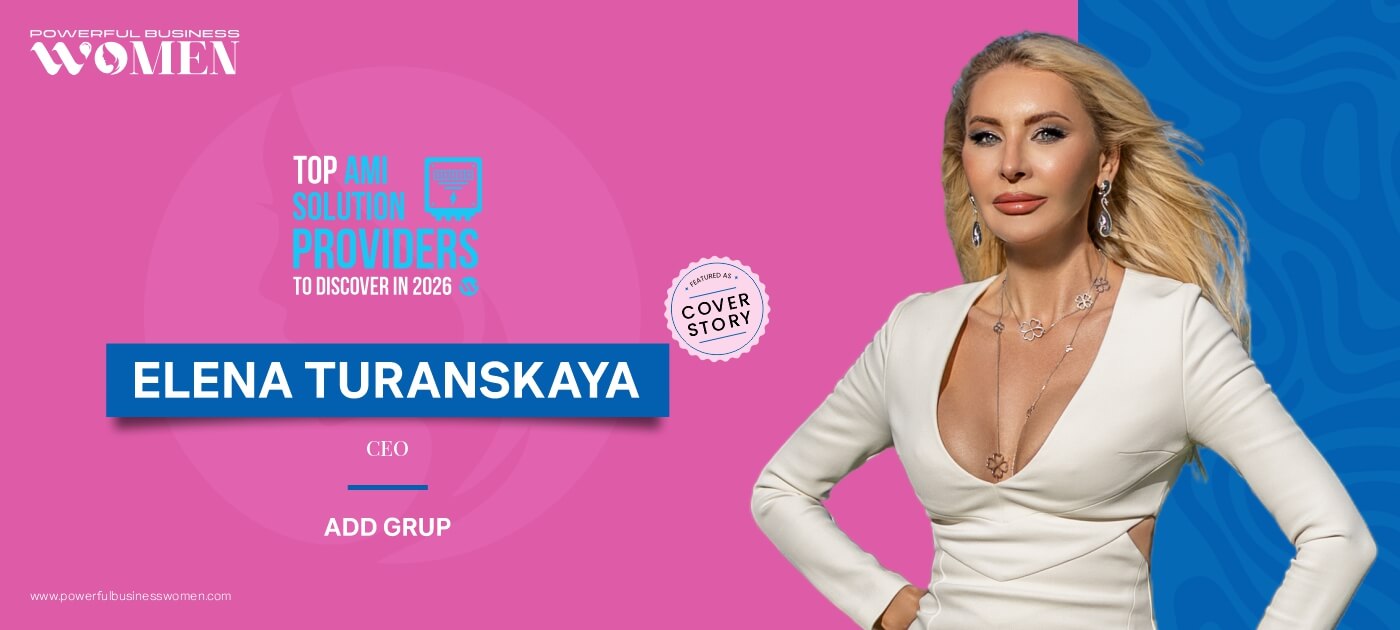
For more than three decades, the company has built metering technologies that treat data not as output, but as operational intelligence. And at the center of this evolution stands Elena Turanskaya, CEO of ADD GRUP; a leader whose journey inside the organization mirrors its global expansion and long-term technological philosophy.
From a Local Manufacturer to a Global AMI Player
Elena Turanskaya joined ADD GRUP in the late 1990s, at a time when the company was still largely focused on markets within the former Soviet Union. What followed was not a gradual transition, but a deliberate reinvention of how the company saw itself.
Within a few years, she built ADD GRUP’s marketing function from the ground up as a strategic lever. The objective was clear: transform ADD GRUP from a regional manufacturer into a global technology brand.
That shift began in the early 2000s. Under her leadership, the company moved decisively beyond its traditional markets and entered the European Union, Latin America, Africa, and Southeast Asia. ADD GRUP established a presence even in geographies as diverse as India, Indonesia, and New Zealand; markets with vastly different regulatory frameworks and infrastructure realities.
What followed was a natural progression. Elena went on to lead both marketing and sales, shaping not just how ADD GRUP spoke to the market, but how it positioned its technology, its value, and its long-term relevance.
Choosing AMI Before the Industry Named It
ADD GRUP entered the electricity metering space in 1998, at a moment when the industry’s ambitions were modest. The initial idea was to develop add-on devices that could read legacy meters. It was a short-lived concept.
The company’s R&D and leadership teams quickly recognized that remote meter reading alone would never be future-proof. What utilities truly needed was visibility into the grid itself.
While many competitors were still designing one-way AMR systems that delivered consumption data once a month via walk-by or drive-by collection, ADD GRUP made a different call. From its very first smart metering designs, the company built two-way communication into its architecture.
Power line communication became the backbone. Meters were designed to transmit data frequently, receive commands, and act as active nodes within the electricity network. They included built-in disconnection relays, allowing utilities to remotely manage non-payment scenarios. Over time, functionality expanded to include power quality parameters, voltage anomalies, outages, tamper detection, and network diagnostics.
“We understood very early that smart metering is not about reading consumption only; it is about healing the electricity infrastructure,” Elena explains.
By the mid-2000s, ADD GRUP was already delivering full AMI solutions while much of the industry was still catching up to two-way communication. It was not a coincidence; it was a necessity.
Operating from the Republic of Moldova came with its own challenges. ADD GRUP was competing not only against multinational incumbents, but also against perceptions tied to geography. The only way forward was technological leadership.
“The only chance for us to be successful was to be technologically ahead of our competition,” Elena says.
Competing Beyond Size and Legacy
Today, ADD GRUP has over 9 million smart meters installed across 38 countries. Its brand is recognized globally, yet Elena is candid about the competitive landscape.
By scale and turnover, ADD GRUP does not match century-old metering giants. And over the past decade, standardization has reshaped the electricity metering market. Utilities increasingly procure through public tenders where compliance and interoperability are non-negotiable. When every meter meets the same specifications, price becomes the dominant differentiator.
This environment has favored manufacturers with ultra-low-cost production models, particularly from China.
Rather than compete in a race to the bottom, ADD GRUP made a strategic pivot.
Five years ago, the company expanded its portfolio into smart water metering; a market still early in its maturity, with room for innovation, differentiation, and meaningful impact.
Why Water Changed the Equation
Unlike electricity metering, smart water metering is still in its formative years. The industry lacks rigid standards, and utilities face mounting pressure from climate change, inefficiency, and water scarcity.
By 2050, global forecasts suggest that two-thirds of the world’s population could face limited access to clean water. Losses, leaks, and inefficient distribution are no longer acceptable operational risks.
ADD GRUP’s approach to water metering mirrors its early philosophy in electricity. Measurement is secondary; intelligence comes first.
The company’s smart water meters integrate pressure sensors, acoustic leakage detection, and remotely controlled shut-off valves. These features allow utilities to identify leaks through sound harmonics, detect pressure anomalies, and manage consumption during drought conditions.
ADD GRUP is also one of the few global vendors offering water meters with integrated shut-off valves, enabling utilities to enforce consumption norms dynamically. In regions facing water stress, this allows controlled daily allocation without manual intervention.
As Elena explains, smart water metering is not about billing; it is about making water supply sustainable.
This focus has driven adoption. Today, ADD GRUP is running water metering projects, pilots, and proof-of-concept deployments in nearly 30 countries, ranging from small-scale trials to large commercial rollouts.
A Unified Portfolio for Complex Utilities
ADD GRUP’s current portfolio brings together electricity metering, water metering, and sub-metering services under a common philosophy.
Its electricity meters address modern grid challenges such as renewable integration, microgeneration, and voltage instability. As consumers become prosumers, feeding energy back into the grid through rooftop solar, utilities require near real-time visibility to prevent overloads and outages.
Meters now act as grid sensors. They report voltage rises, quality deviations, and outage durations, allowing utilities to intervene remotely. In certain scenarios, meters even enable dynamic pricing, including negative tariffs, where excess generation needs to be absorbed by demand.
“Smart meters are here to deliver accurate, close to real-time information about what is happening in the grid,” Elena notes.
Meanwhile, ADD GRUP’s ADERA sub-metering service addresses a gap most competitors overlook. Designed for landlords, hotels, and short-term rentals, ADDERRA enables individual billing for electricity and water without manual interaction. Tenants pay directly via a smartphone application; no intermediaries, no friction.
It is a practical example of how ADD GRUP builds solutions not just for utilities, but for emerging consumption models.
Learning from Global Complexity
Operating across diverse geographies has shaped ADD GRUP’s core design philosophy. The company has learned that no single solution fits all markets.
Regulations vary. Infrastructure maturity varies. Communication technologies vary.
As a result, ADD GRUP builds its systems on open architectures aligned with international standards, yet flexible enough to adapt locally. Support for multiple communication technologies ensures deployments succeed both in advanced digital ecosystems and in regions still modernizing their grids.
Strong partnerships, Elena emphasizes, are essential. Technology alone does not guarantee success; reliability under real-world conditions does.
Sustainability as an Operational Outcome
For ADD GRUP, sustainability is an operational consequence of better data, rather than just a marketing layer.
Accurate, real-time information allows utilities to reduce losses, optimize distribution, and lower emissions across electricity and water systems. For consumers, transparency changes behavior.
“By making consumption visible and controllable, our solutions support long-term behavioral change,” Elena says.
Smart metering becomes a foundation for climate action, not by ambition, but by execution.
Looking Ahead to the Next AMI Chapter
Over the next five years, Elena expects AMI ecosystems to deepen their integration with IoT platforms, predictive analytics, and automated grid management. Interoperability and data security will become non-negotiable. Consumers will demand more control, flexibility, and transparency.
Electricity metering may see incremental evolution, but water metering remains wide open for innovation.
ADD GRUP’s strategy remains consistent: anticipate challenges before they become constraints.
“For utilities shaping the future of energy and water management,” Elena concludes, “investing in smart metering today is not just a technological choice; it is a strategic imperative.”
It is a philosophy that has guided ADD GRUP from its early days and continues to define its role in the global AMI landscape.