
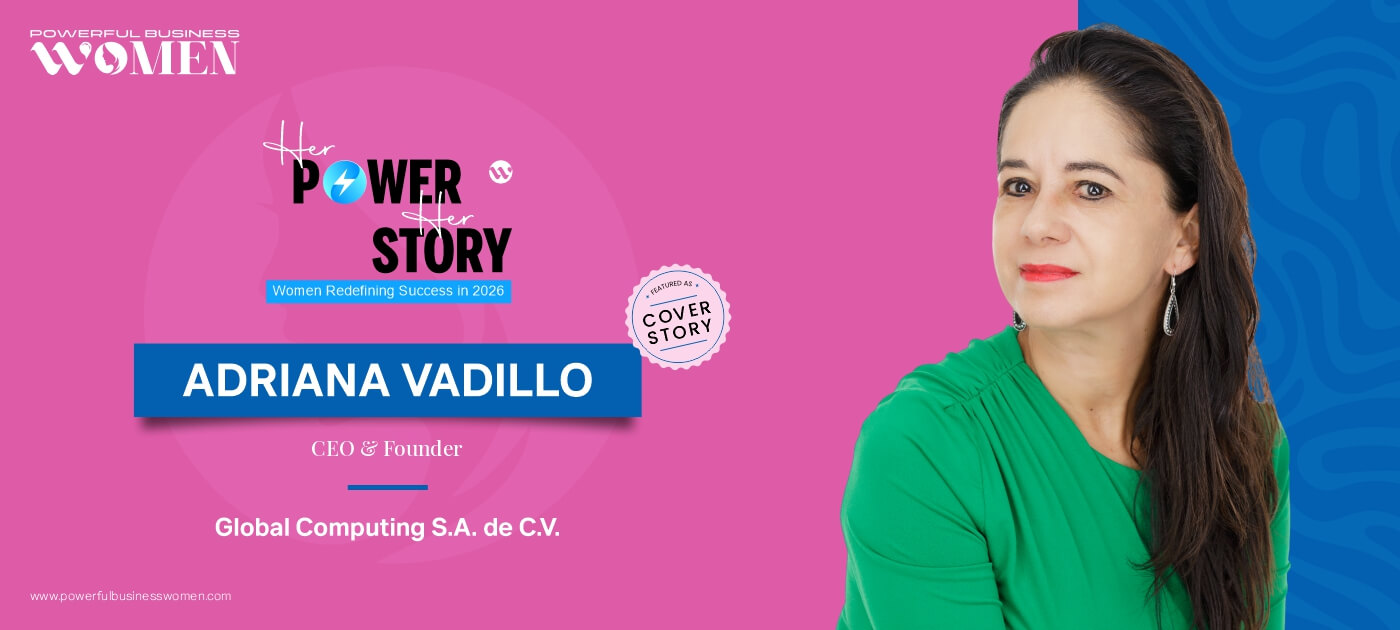

Technology doesn’t distribute itself equally across borders. The gap between developed nations and emerging markets isn’t just about infrastructure—it’s about access, trust, and the willingness of someone to build bridges where others see only barriers. For academic institutions and government agencies in Mexico, accessing cutting-edge computational tools and geospatial analysis software once meant navigating a labyrinth of international suppliers, language barriers, and skepticism about their capacity to deploy advanced solutions. The transformation of this landscape required more than a distributor; it demanded a visionary who understood that democratizing technology meant fighting battles on multiple fronts—against competitors, against cultural norms, and against a business ecosystem that rarely rewards those who dare to rise.
Adriana Vadillo didn’t just position herself as a technology provider. She became the bridge that Mexico’s scientific and academic community didn’t know they desperately needed.
The Making of a Fighter
Responsibility found Adriana Vadillo early. As the oldest of four daughters, she learned self-sufficiency not as a choice but as necessity. By 22, she had landed her first job at Microsoft, followed by a pivotal role at Sybase where she was trained in Burlington, Massachusetts, overseeing the Training Facility and Consulting Services. The trajectory seemed promising, the kind of early career momentum that validates ambition.
Then reality hit. After two years of operations, Sybase’s Mexican branch failed to meet targets and shut down. At 26, Adriana was unemployed, standing at the crossroads that breaks some people and forges others. Visual Numerics Inc., an American company, contacted her with an opportunity that would define her path: open a subsidiary office in Mexico from scratch. She accepted the responsibility at an age when most professionals are still finding their footing, setting up operations in unfamiliar territory with nothing but her conviction and competence.
But understanding Adriana requires understanding what drives her beyond professional milestones. “I am an optimistic and idealistic person who thinks that we get what we give,” she reflects. “I am empathetic and kind, always giving and being a helping hand to everyone around me. I like to change people’s lives in a positive way by inspiring them and motivating them and specifically by showing them that everything is possible.”
Her self-description reveals something deeper—a woman who carries the weight of others’ struggles because she knows them intimately. “I am a giver by nature, and I like to care about people. I wouldn’t want them to suffer the way I have suffered in life. I am a facilitator and I lead by example.”
She claims the label feminist without hesitation, defining it through action rather than rhetoric. “I will always be a supporter of the causes in need and what needs to be balanced in our current world. I would always take the side of the people in need and of the minorities and less favored. I don’t like injustice and will do whatever it takes to balance opportunities to be equal to everybody.”
When Success Becomes the Weapon Against You
For 18 years, Adriana worked relentlessly to position Mathematica, an algebraic software product that became her company’s flagship offering. She built relationships, earned trust, and established Global Computing as a success case across Latin America. Ninety percent of their income flowed from this brand she had positioned through sacrifice and strategic persistence. Then the ground shifted beneath her.
Competition driven by what she describes as “evil and ambitious motivations” bribed the software manufacturer, terminating the distributorship agreement she had built for nearly two decades. The business she had developed through hard work and countless sacrifices was handed to her competitor on a silver platter. The betrayal was complete, the loss devastating.
“It was a very hard moment to go through so I decided to re-invent myself and moved to Canada to study an MBA,” she recalls. The decision to leave wasn’t retreat—it was recalibration. But distance couldn’t erase the trust she had built with her clients.
INEGI, Mexico’s Statistical and Geographical Institute, reached out with a request that would shift everything. They needed support with geospatial analysis solutions and training for a cartography project that hadn’t been developed in the country for 30 years. The request was specific, the trust absolute: the only company and person that both the customer and the software supplier—a U.S. defense company—trusted for the project was Adriana and Global Computing.
This was the moment I moved from deep self-doubt—after losing motivation and purpose when my business was harmed by unethical competitors—to believing in myself again, thanks to the trust placed in me by customers and suppliers,” she explains. She returned to Mexico, mission renewed, purpose restored.
This pivotal moment redefined what success meant to her. “At the current stage in my life, I think that success means having peace of mind, being happy with what you do and having a positive impact on your environment.” The evolution wasn’t just philosophical—it was survival wisdom earned through loss.
The Crab Bucket Syndrome
Adriana recalls a story her father told her as a child: success was not synonymous with happiness. The words confused her young, visionary mind. How could making a difference, adding value, helping others achieve their dreams—how could any of that exist apart from happiness?
Years later, she understands. The lesson wasn’t about success itself but about the culture that shapes how success is received, perceived, and punished.
She tells the story deliberately, knowing its sting: A fisherman sells crabs from three buckets on the beach. The bucket with Japanese crabs has a lid. The bucket with American crabs has a lid. The bucket with Mexican crabs doesn’t need one. When asked why, the fisherman explains that when a Mexican crab tries to escape, those below pull it back down. No lid necessary—Mexican crabs won’t help each other climb.
“This story may seem a little bit funny, but it has a deep meaning in our society as it reflects that if you are talented and want to pursue your dreams, society will not allow you to do so,” Adriana says, her words carrying the weight of lived experience. “In Mexico, people often support your success, but only up to a point. So, it is difficult to fight for your dreams and even harder to be authentic.”
The cultural context is suffocating. People refuse to leave their comfort zones, demanding guarantees before taking risks. When someone attempts something significant, instead of collaboration, competition emerges—not to build something better, but to tear down what threatens the status quo.
“You need to be a fighter; you need to swim against current and understand that you will be working alone.”
Add gender to this equation, and the resistance multiplies. “Another important aspect to consider is the fact of being a woman, because traditionally in Mexico, men are the supplier and the most important figure in our society. If you are a woman in business, they will perceive you as a bossy person and won’t accept that you can be as capable as a man to accept responsibilities and perform the work as good as a man can do.”
The memory is specific, the humiliation still fresh decades later. At 25, working at Sybase as coordinator of professional services, overseeing the training facility and consulting projects, her manager refused to accept her position. Instead of support, she received isolation—sent to a separate, empty area of the building, given her colleagues’ documents to file. The message was clear: a woman in her position was an aberration to be contained, not a talent to be developed.
“After 25 years in the business sector, I realize that it is very difficult to be a woman, to be an entrepreneur and to be successful in Mexico,” she states plainly. “You have to be very strong. You must understand where you are. You must fight for your dreams. You must prove that you are capable as men. You must demonstrate that you are adding value.”
But her argument transcends personal grievance, reaching toward systemic change. “We need an inclusive workspace as diversity is not just a matter of social justice, but it is a catalyst for creativity, productivity increase and better decision making. Diversity and inclusion will help pave the way for a more innovative, prosperous and sustainable future for our global society.”
Her mission crystallizes around representation. “Therefore, as a woman it is important to have a place in the workspace and be an example of what we as women can do and the value and benefits we bring to the table. It is important to be a role model and inspire other women, especially younger ones, that it is possible.”
The stakes extend beyond individual achievement. “Having more women in the workspace is crucial for creating a more equitable society but also essential for unlocking the full potential of human capital and walking towards a better future for all.”
Adriana identifies another cultural barrier unique to her context: extreme individualism. “In Mexico, the common good often comes last, as people tend to be very individualistic. That’s why education is essential—to help people understand that every action affects others, and that we are all in the same boat.”
Becoming that agent of change carries its own dangers. Inspiration can curdle into envy. Success invites sabotage. “To achieve this, you must become an agent of change and lead by example. However, this is not easy—while inspiring others to be positive, it can also provoke resentment. Sometimes, people don’t want to see you succeed, and inspiration can turn into competition, even a fierce desire to bring you down.”
Counsel for Women Who Refuse to Shrink
When asked what advice she would give women who feel pressured to conform or diminish themselves in leadership spaces, Adriana’s response carries the authority of someone who has fought these battles and bears the scars.
“So, I would suggest women to continue fighting for their dreams, to not listen to other people’s opinions, to not accept the places where society wants to put you,” she urges. “Work hard, understand that your actions will have an impact on other people’s lives, since we are all in the same boat and if we want a better world, we should work together. Hang in there, keep working, be a fighter, swim against the current, don’t give up and believe in yourself!!”
The metaphor isn’t casual — swimming against the current defines her entire approach. Where others seek the path of least resistance, Adriana has built her legacy by pushing upstream.
The Bridge Builder’s Legacy
When Adriana reflects on her most meaningful achievement, the answer sidesteps typical metrics of scale or revenue. “Bringing technology closer to academic and government institutions,” she says. “My mission was to bridge the gap between more developed countries and my own, ensuring that institutions could access leading technology to develop key projects profoundly impacting productivity and research efficiency.”
The establishment of Global Computing wasn’t merely a business decision—it was a strategic intervention. “Driven to empower academic and government institutions, I established Global Computing to facilitate access to cutting-edge technology. My company became the means through which these institutions could harness advanced tools, enabling them to execute faster and more efficient research applications.”
The impact transcends transactions. Universities could suddenly deploy computational tools that accelerated research timelines. Government agencies could execute geospatial analysis that would have been impossible without her intervention. Scientists and professors found themselves equipped not just with software, but with possibilities.
Her boldest aspiration for the next chapter remains rooted in this mission: “Continuing my professional project gives me a deep sense of purpose. Through my company, I help scientists and professors by making technology accessible, and serving others is what truly makes me feel alive.”
A Message Without Illusions
For International Women’s Day 2026, Adriana offers counsel shaped by brutal honesty and hard-won wisdom:
“Follow your heart and work incessantly towards your goal no matter what other people think and tell you. You will always be criticized, and people will always tell you that you won’t make it, but they are talking about their fears and limitations not about yours, so don’t pay attention. Prepare to lose what you’ve built over time and start over. Train yourself to lose the fear of losing what you love most.”
The words refuse to sugarcoat reality. She expands on this philosophy with unflinching clarity: “I will advise women across the world to follow their passion, to swim against the current and be strong to defend what their hearts and minds dictate. To be conscious that each of us has a very individual mission which is not equal to anybody else. To not listen to others but their inner selves and defend their dreams and work hard to reach their goals. To be aware as well that results will not be immediate and that things that are worth it will take time.”
Her hope for how her story inspires others, particularly young women, centers on authenticity in adversity. “I hope my story inspires others. It has been very difficult to stay positive and true to my values in a hostile environment, but I believe that no matter how others treat you, giving your best in every situation brings meaning and satisfaction.”
She doesn’t promise reciprocity or fairness. Instead, she offers a different calculus. “You will have to reinvent yourself many times throughout your life, and you will have to start over more than once. Resilience, commitment, and passion will be essential to making your dreams come true. Your greatest assets are your mind and your heart—everything you need is already within you.”
The final lesson contains perhaps the hardest truth: “It is better to not have expectations. You will not receive what you give but you should give anyway.”
This isn’t pessimism; it’s liberation. Freedom from the transactional thinking that measures every action by its return. Permission to build, create, and contribute without waiting for the world to validate the effort.
Adriana Vadillo has spent decades swimming against currents that would have drowned most people. She has rebuilt after betrayal, persisted through isolation, and refused to let a culture of competition and conformity define her ceiling. Through Global Computing, she has transformed how Mexican institutions access technology, proving that one person’s refusal to accept barriers can reshape possibilities for thousands.
Her legacy isn’t just the companies she’s built or the software she’s distributed. It’s the demonstration that swimming against the current isn’t just survival—sometimes, it’s the only way to create the path that others will eventually follow.