
Leadership today is undergoing a reset. In boardrooms, classrooms, and communities, the old image of the “perfect leader” — untouchable, flawless, armored — is cracking under the weight of reality. What people crave now isn’t perfection. It’s presence. It’s humanity. It’s leaders who can stand tall not because they’ve never fallen, but because they’ve mastered the art of rising.
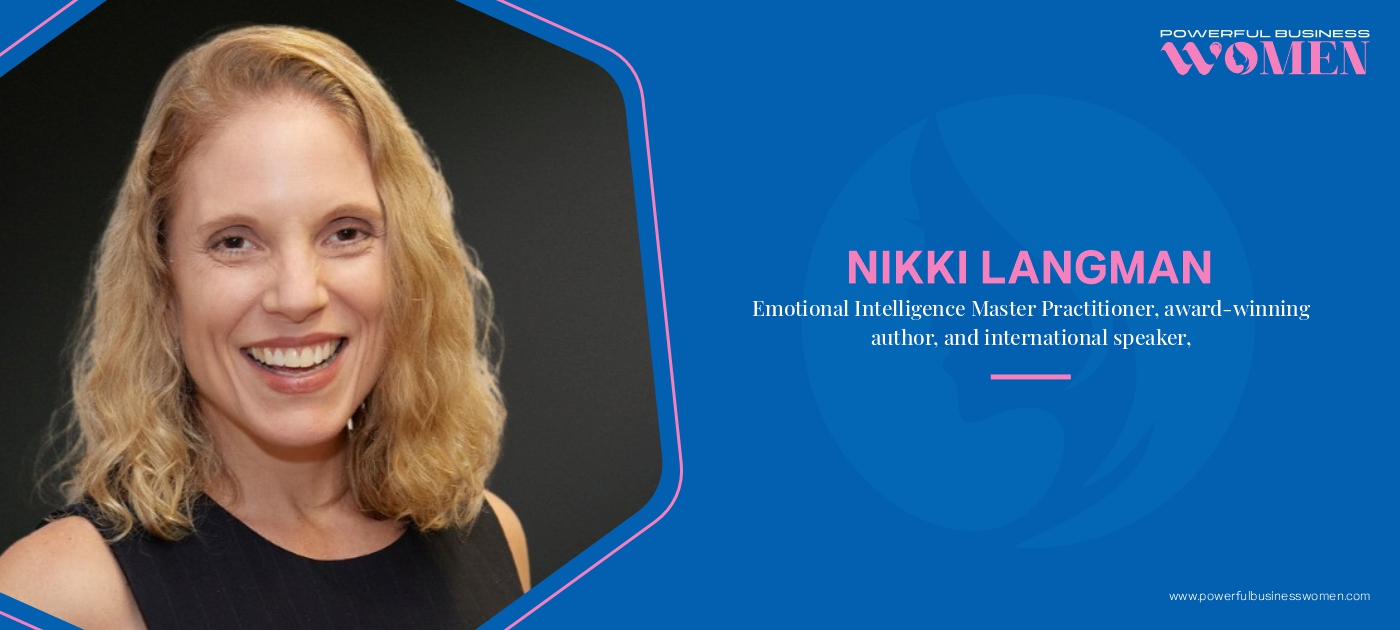
That’s exactly where Nikki Torres Langman steps in. An Emotional Intelligence Master Practitioner, award-winning author, and international speaker, Nikki has turned scars into blueprints and vulnerability into strength, reshaping the way the world defines resilience and leadership.
This shift isn’t just philosophical—it’s deeply practical. In an era where employee engagement has plummeted, where mental health crises dominate workplace conversations, and where trust in traditional authority continues to erode, organizations are discovering that the leaders who connect most powerfully with their teams aren’t the ones who appear invincible. They’re the ones who have learned to be authentically human while maintaining their strength.
From university halls to corporate boardrooms across multiple continents, Langman is challenging the very foundations of how we think about authority and self-mastery. Her approach isn’t built on theory—it’s forged from personal experience, transformed into practical frameworks like her BADASS blueprint and UNBRICKABLE™ methodology that make courage and authenticity not just aspirational concepts, but daily practices accessible to anyone willing to do the work.
When Vulnerability Became Power
The moment that would define Langman’s entire philosophy of leadership happened in the most unlikely of places—a corporate boardroom. Standing before her colleagues, she was trembling, perspiring, and terrified as she prepared to share something that would either destroy her credibility or transform it entirely.
“I was shaking, perspiring, and terrified as I told my colleagues I was in recovery from alcohol and prescription drug addiction,” Langman recalls. “Most of them probably already knew, but I had never said it out loud. And once I did, the room didn’t judge me. They leaned in. They saw me. That moment taught me that vulnerability doesn’t repel people—it connects them. Speaking the truth isn’t just freeing for you, it gives others permission to share theirs.”
This pivotal moment shattered everything Langman thought she knew about leadership and authority. The very admission she feared would end her career became the foundation of a new understanding: that authentic power doesn’t come from hiding our struggles, but from transforming them into bridges that connect us to others.
It was this revelation that would eventually lead her to develop frameworks that have now reached audiences across multiple continents, helping leaders navigate the delicate balance between strength and vulnerability, authority and humanity.
The Birth of BADASS: From Personal Mantra to Global Framework
What started as a private pep talk during lonely runs and nerve-wracking moments before taking the stage has evolved into one of the most practical leadership frameworks of our time. The BADASS methodology didn’t emerge from academic research or corporate consulting—it was born from necessity, tested in the crucible of real-world application.
“BADASS was an affirmation before it became a framework,” Langman explains. “On long runs or before walking on stage, I’d tell myself, Come on, badass, you’ve got this. It was my private push to keep going when everything felt impossible.”
But as Langman began speaking to diverse audiences across cultures, age groups, and belief systems, she noticed something fascinating: the word “badass” landed differently for different people. Some embraced it immediately, while others recoiled. This observation led to a crucial realization—she needed to give the word shape, definition, and universal applicability.
“I realized I needed to give the word shape—a definition that explained what I meant,” she reflects. “That’s when I put down six words that captured what I believed a true badass is: Bravery, Authenticity, Direction, Action, Self-love, and Self-talk. The acronym was almost too perfect. Suddenly, my personal mantra became a universal framework that leaders, students, and workplaces could adopt.”
The beauty of the BADASS framework lies not in its clever acronym, but in its practical application. Unlike many leadership theories that remain abstract, this system translates into concrete, repeatable habits: courage reps, values check-ins, micro-steps toward direction, nourishment breaks, and reframed self-talk. “Whether at home, at work, or alone, it’s a system that makes resilience visible and repeatable,” she explains.
Rewriting the Rules of Organizational Culture
Langman never intended to write How to Be a BADASS as a corporate tool. “It was my survival manual,” she admits. “I was tired of the impossible standard that we should ‘show up as our best self’ every single day. I don’t buy it. No human can keep that up.”
This refreshing honesty strikes at the heart of what’s wrong with much of today’s workplace culture. The pressure to maintain constant optimism and peak performance isn’t just unrealistic—it’s counterproductive, leading to burnout, disengagement, and the very inauthenticity that modern organizations are trying to combat.
Langman’s alternative is both more achievable and more sustainable: “What we can do every day is be BADASS: find the courage to be brave, the integrity to be authentic, the clarity to choose direction, the grit to take one small action (even if it’s just combing your hair), and the compassion to speak kindly to ourselves. That’s possible.”
She also adds, “That shift—from unrealistic perfection to practical badassery—is why organisations have picked it up. It gives people a shared language that’s simple, human, and sustainable. It changes culture by embedding micro-habits that build trust, authenticity, and resilience into the daily fabric of work and life.”
The Delicate Dance: Balancing Vulnerability and Authority
Perhaps nowhere is Langman’s wisdom more evident than in her approach to one of leadership’s most challenging paradoxes: how to be both vulnerable and authoritative without losing credibility or effectiveness.
“Every leader struggles with this: how much do I share without losing credibility?” she acknowledges. “Early in my career, I thought authority meant armour—don’t cry, don’t crack, never show doubt. But the cost of that façade was disconnection.”
Her solution is both elegant and profound: “Power without vulnerability is dangerous. Vulnerability without power is ineffective. But when you bring the two together, you create trust.”
This balance didn’t come overnight. Langman openly admits to testing the boundaries, sometimes oversharing, sometimes closing off completely. “I didn’t find that balance overnight. I tested it. Sometimes I overshared, sometimes I clammed up. But eventually, I found the rhythm: reveal enough to be human, and pair it with the confidence of someone who has lived, failed, rebuilt, and now leads from scars, not masks.”
This philosophy represents a fundamental shift in how we think about leadership presence. Rather than projecting invincibility, authentic leaders project resilience—the ability to be broken and rebuilt, to fail and recover, to be human while still being strong.
UNBRICKABLE™: Building Resilience That Lasts
While the BADASS framework provides the daily practices, Langman’s UNBRICKABLE™ methodology addresses the deeper work of resilience building. This program has found particular resonance in educational settings, where young people are facing unprecedented levels of stress and mental health challenges.
A recent workshop in Queensland provided one of Langman’s most powerful validation moments. “The most surprising moment came recently at an UNBRICKABLE™ workshop in Queensland. A young woman told me, ‘This gave me words for what I’ve been carrying inside for years.’ That hit me hard. It reminded me this isn’t just a program—it’s a release. It gives people a way to build and express what they couldn’t always put into words. And in that moment, everyone in the room could feel the power of giving language and shape to what’s often been silent.”
This ability to give voice to previously unarticulatable experiences is perhaps one of Langman’s greatest gifts. In a world where mental health conversations are finally emerging from the shadows, her work provides practical tools for not just surviving difficult emotions, but transforming them into sources of strength.
The Universal Language of Human Struggle
Despite speaking to vastly different audiences across multiple continents, Langman has discovered a profound truth about human nature: “Everyone wants the same thing: to be seen, heard, and unconditionally accepted. Students in Melbourne, executives in New York, scholars in Dublin—different accents, same struggle. People are tired of performing. They crave spaces where they can admit they’re scared, where they can share without judgment, where they can stop pretending they’re fine.”
This observation cuts to the heart of why her frameworks resonate so broadly. In an increasingly connected yet isolated world, the hunger for authentic connection transcends cultural, generational, and professional boundaries. “That’s why UNBRICKABLE™ and the BADASS framework resonate everywhere. Humanity takes over.”
Leading from Scars, Not Masks
When asked about her inspirations, Langman’s answer reveals much about her philosophy: “I’m inspired by people who lead with scars, not masks. Celebrated athletes who vulnerably share their truth. Women in leadership who own their voice even when the room tries to shut them down. Leaders who admit, ‘I don’t know,’ because intellectual humility is rarer than gold. My biggest inspirations aren’t flawless heroes. They’re flawed humans who refuse to quit.”
This perspective challenges the traditional hero narrative that dominates leadership literature. Instead of celebrating those who appear to have it all figured out, Langman champions those who are brave enough to be works in progress, who lead not in spite of their struggles but because of how they’ve transformed them.
The Stage as Sacred Space
Before stepping onto any stage, Langman experiences what she describes as “everything. Like a ticker tape parade in fast forward.” But rather than trying to eliminate these nerves, she’s learned to channel them: “But I try to anchor myself in one mantra: Say it like you own it.“
Her pre-stage ritual is refreshingly unscripted: “I don’t pace or script every line. I breathe. I lock onto my WHY. Because the moment I step out, it’s not about me. It’s about the people in front of me who might hear something they’ll carry forever. Sometimes I crack a joke in my head to loosen up. Sometimes the nerves win. But mostly, I stay focused on this: deliver truth with courage, connection with humour, and a message that outlives the mic drop.”
This approach to public speaking mirrors her leadership philosophy—it’s not about perfect delivery, but about authentic connection and lasting impact.
Everyone Deserves a Second Chance
Of all the messages Langman shares, none hits harder than what she tells people who feel like they’re too far gone: “You’re never beyond repair. Every scar is proof you’re still here and still building. I spent more than three decades proving you can always come back.”
Her own journey serves as living proof of this philosophy. Having personally navigated addiction recovery and career rebuilding, she speaks with the authority of experience: “I’ve seen people rebuild marriages, careers, and mental health after decades of struggle. Resilience isn’t about wearing armour. It’s about staying open and coming back stronger every time.”
The metaphor she uses is both simple and profound: “Here’s the truth: the pieces of your life don’t go away. They just need rearranging. That’s what BADASS and UNBRICKABLE™ teach—your bricks are still there. You just haven’t built your comeback yet.”
Scaling Resilience: The Vision for Tomorrow
Looking toward the future, Langman’s ambitions are as strong as they are necessary: “My vision is bold and simple: UNBRICKABLE™ in every school, workplace, and community that needs it—which is everywhere. The next step is building out my global train-the-trainer model, so it’s not just me on stage but an army of facilitators bringing this into classrooms, boardrooms, and institutions.”
This scaling strategy recognizes both the universal need for resilience training and the practical limitations of relying on a single person to deliver it. By training others to carry the message, Langman is ensuring that her impact extends far beyond her personal reach.
Her focus on education is particularly strategic: “I’ve seen firsthand how resilience changes lives. Scaling it means millions more can be changed. I’m already bringing UNBRICKABLE™ into higher education across the US and Australia. Students are our future leaders, and they deserve tools to thrive, not just survive, today’s stressors.”
This investment in the next generation recognizes that sustainable change requires getting to people before they develop the armor and masks that traditional leadership models demand.
The Authenticity Revolution
In a world desperately in need of authentic leadership, Nikki Torres Langman offers more than inspiration—she provides a roadmap. Her journey from the depths of addiction to the heights of international influence proves that our greatest struggles can become our most powerful tools for helping others. Through frameworks like BADASS and UNBRICKABLE™, she’s not just changing how we think about leadership; she’s changing how we practice it, one brave conversation, one authentic moment, one rebuilt life at a time.
As organizations continue to grapple with the challenges of authentic leadership in an increasingly complex world, Langman’s message couldn’t be more timely: the future belongs not to the perfect, but to the brave—those willing to lead with scars instead of masks, vulnerability instead of armor, and authenticity instead of performance. In transforming her own brokenness into a blueprint for resilience, she’s shown us all what it truly means to be UNBRICKABLE.
The reset in leadership isn’t coming—it’s here. And leaders like Nikki Torres Langman are showing us exactly what it looks like when we choose presence over perfection, humanity over invincibility, and authentic strength over carefully constructed facades.
In a world tired of performance, she offers something infinitely more powerful: the courage to be real.
Website- www.nikkilangman.com