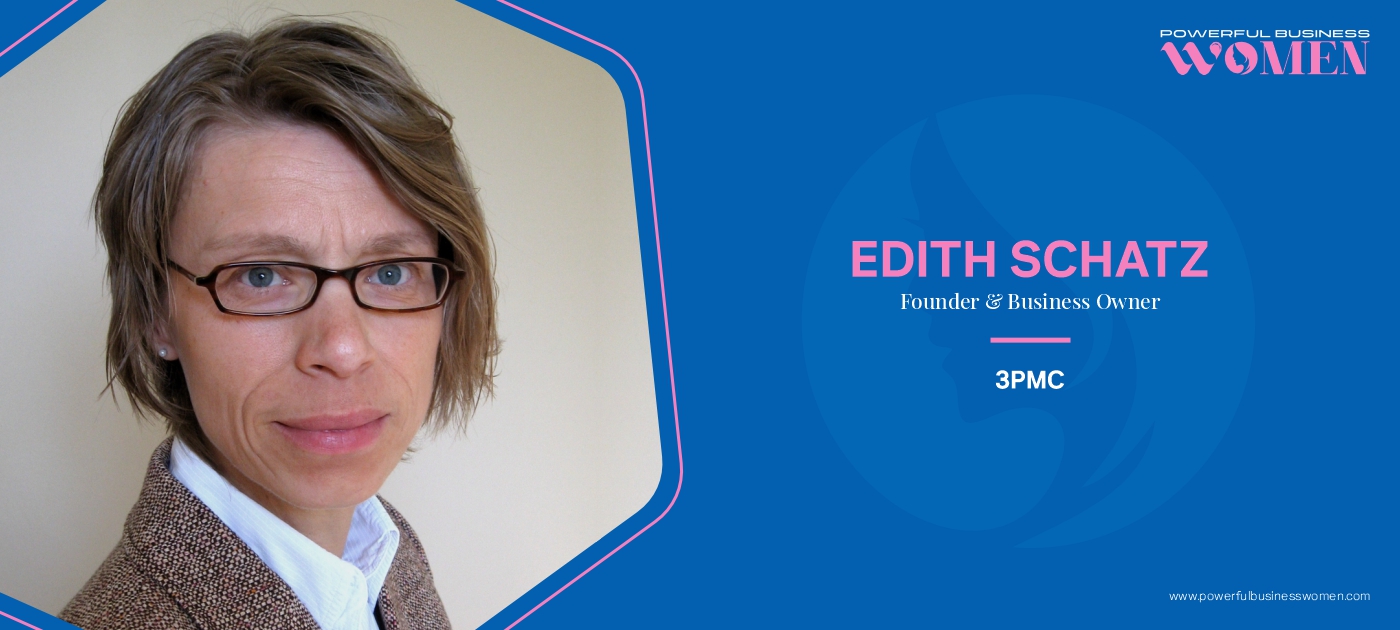

Most consultants arrive with pre-packaged solutions and rigid frameworks. They promise transformation through methodology, systems, and processes. But what happens when the people implementing these changes feel overwhelmed, resistant, or simply forgotten? The answer, according to seasoned project management expert Edith Schatz, is predictable failure.
Edith has built her consultancy, 3PMC, on a radically different premise: “People excellence drives organizational success.” While competitors focus on imposing frameworks from above, she works alongside teams to cultivate ownership, resilience, and innovation. It’s an approach that has transformed organizations across industries and cultures, proving that the human element remains the most critical factor in any successful transformation.
From Numbers to Networks
Edith’s journey began modestly more than three decades ago as an accountant in Southern Germany. “At the time, my ambitions were modest, and I never imagined the professional journey ahead of me,” she recalls. What started as traditional number-crunching quickly evolved into business controlling and IT applications, roles that exposed her to the intricate web of organizational processes.
This exposure sparked something deeper. “That role exposed me to a wide variety of business processes and revealed my curiosity for how organizations function and improve,” Edith explains. Her transition from controlling to process consulting and eventually to project and portfolio management wasn’t just career progression—it was the discovery of her true calling.
“Well-structured projects can transform not only systems and organizations but also people’s working lives,” she says. “That was the spark that guided me toward becoming a consultant and, later, founding my own company, 3PMC.”
The Brussels Breakthrough
After 25 years with the same international corporation, in 2014, Edith and her husband relocated to Brussels, Belgium.
Edith reflects. “This transition opened my world both personally and professionally.” She immersed herself in French and Dutch, launched a creative side business designing tablecloths, and most importantly, founded 3PMC.
The move represented a complete reinvention. “That move was more than geographic—it was the beginning of a new chapter defined by independence, creativity, and impact.” Brussels became her laboratory for applying decades of experience in fresh, entrepreneurial ways across different cultures and industries.
Leadership Through Crisis
True leadership reveals itself not in smooth operations but in crisis management. Edith faced this test when she stepped into an interim managerial role and inherited a particularly challenging situation: a long-term employee on sick leave was misusing the system while colleagues shouldered his responsibilities.
Legal channels proved fruitless, but Edith found a different path forward. “I chose transparency. I explained the situation openly, acknowledged the burden, and redistributed tasks fairly. I also adjusted job profiles and, where possible, negotiated salary increases to recognize the extra workload.”
The approach worked. “By being honest and solution oriented, I restored trust and morale within the team.” The experience crystallized her leadership philosophy: “Leadership is not about control—it’s about creating fairness, clarity, and stability in difficult circumstances.”
The PMO That Changed Everything
Perhaps no single decision better illustrates Edith’s collaborative approach than her establishment of a Project Management Office (PMO) at a major industrial company’s IT division. With 400 employees and a $100 million internal project budget, the stakes were enormous, and scepticism was fierce.
Traditional consultants might have pushed through a predetermined solution. Edith chose inclusion over speed. “We decided not to push a pre-designed solution but to involve every stakeholder in shaping the processes. By conducting interviews, setting up cross-functional working groups, and launching a project management community, we co-created a system that the organization embraced.”
The results spoke volumes. The PMO succeeded locally and was later rolled out company-wide. “That decision to prioritize inclusivity over speed fundamentally shaped my belief in collaborative leadership,” she notes.
Empowering the Next Generation
Edith’s commitment to empowerment is reflected in her approach, which is refreshingly straightforward: “For me, empowerment begins with authenticity and respect. I listen carefully to people’s ideas, acknowledge their backgrounds, and recognize their achievements.”
She encourages women to claim their space confidently. “I encourage women especially to trust their skills and claim space at the table. My role is not to speak for them but to create an environment where they feel safe and encouraged to speak for themselves.”
Her advice to aspiring women leaders is practical and powerful. “First, learn to lead yourself—manage your time, your emotions, and your energy before expecting to lead others. Second, be resilient. You will face setbacks but remember: success is simply getting up one more time than you fall. Third, stay authentic. Do not try to mimic men’s leadership styles. Find your own voice, grounded in empathy, trust, transparency, and reliability.”
Redefining Emotional Intelligence
Edith is particularly passionate about debunking one persistent myth: “The myth I would most like to dispel is that women are too ’emotional’ to lead effectively. Emotions are not weaknesses; they are signals of what matters most.”
She argues that emotional intelligence is actually a competitive advantage. “Empathy, sensitivity, and intuition are critical leadership qualities, especially in today’s collaborative, knowledge-driven workplaces. Emotional intelligence builds trust, fosters loyalty, and helps organizations thrive.”
A Legacy of Empowerment
As Edith looks toward the future, her aspirations remain firmly people-centered. “I hope my legacy is one of empowerment. I want people to remember me not only as someone who managed successfully projects or organizations but as a leader who believed in people, trusted their potential, and helped them achieve more than they thought possible.”
The vision extends beyond individual interactions. “If colleagues, clients, and teams can say that I encouraged them to grow, to take risks, and to embrace resilience, then I will have succeeded. Ultimately, legacy is about the ripple effect you leave in the lives of others.”
Through 3PMC, Edith continues proving that the most sophisticated frameworks and cutting-edge methodologies mean nothing without the human touch. Her people-first philosophy doesn’t just deliver better project outcomes—it transforms how organizations think about collaboration and change itself.
Now based in the United States, Schatz is poised to bring her distinctive blend of European sensibility and people-centric methodology to American organizations ready for transformation. Her next chapter has begun, and she’s ready to make her mark.