

The most dangerous person in any industry isn’t the one with the most money, the best connections, or even the smartest strategy. It’s the one who doesn’t play by the rules because they never learned them in the first place.
While MBA graduates dissect case studies about separating emotion from business decisions, while venture capitalists preach about scalable models that strip away human connection, while corporate giants optimize for shareholder value above all else, a woman from the mountains of Himachal Pradesh has been quietly dismantling every assumption about how business should work.
She serves blessings with her coffee. She rings Tibetan bells in boardrooms. She’s built India’s only woman-owned security empire on the foundation of spiritual charm. And somehow, impossibly, it’s working better than anyone could have predicted.
This isn’t a story about disruption in the Silicon Valley sense. This is about something far more radical: proving that the business world’s most sacred assumption—that profit and purpose are mutually exclusive—is completely wrong.
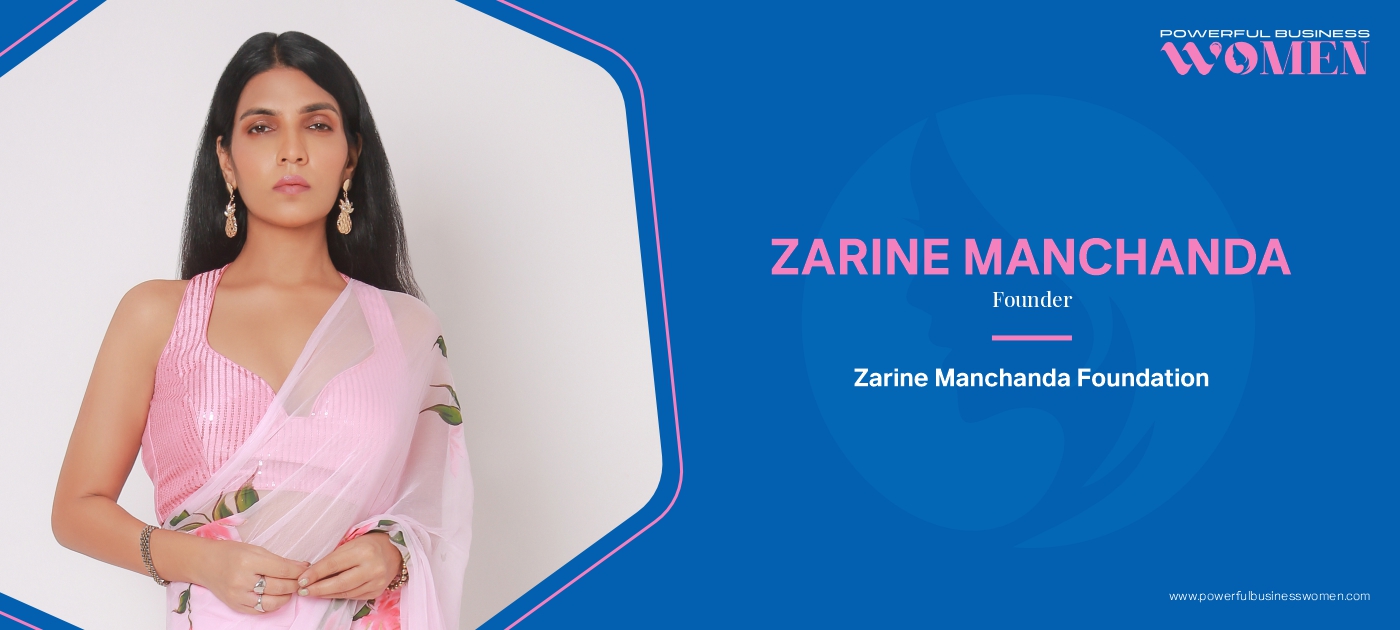
Dr. Zarine Manchanda represents the most terrifying threat to traditional business thinking: someone who succeeded by ignoring everything they taught in business school.
When Failure Becomes Foundation
The story begins with what most would consider a crushing defeat. Mumbai, 2018. Another aspiring actress among thousands, facing the brutal reality that Bollywood dreams don’t always come true. For most, this would have been the end of the story—a return home, perhaps a conventional job, maybe a quiet life of what-ifs.
But failure has an interesting effect on certain people. Instead of breaking them, it strips away their need to follow conventional paths. When you’ve already lost what you thought you wanted most, you become dangerous in the best possible way—free to reimagine everything.
Zarine didn’t return to Himachal Pradesh defeated. She stayed in Mumbai, but with a completely different mission. If the entertainment industry wouldn’t accept her vision of success, she would create her own industry entirely.
The Zarine Manchanda Foundation emerged in 2019 not as a charity project, but as a declaration of war against the idea that helping others and building wealth were separate pursuits. While other foundations struggled to maintain funding through donor fatigue and economic downturns, Zarine was architecting something unprecedented: a charitable organization that would become the cornerstone of a business empire.
The Mathematics of Compassion
Numbers tell stories that sentiment cannot. Between 2019 and 2021, while the world struggled through lockdowns and economic uncertainty, the Foundation executed over 500 donation programs. Not small gestures, but comprehensive initiatives that provided food, clothing, and dignity to Mumbai’s most vulnerable populations.
But here’s where conventional charity logic breaks down: each program wasn’t just an expense; it was market research. Every interaction with Mumbai’s underprivileged revealed gaps in the city’s service economy that no one else was paying attention to. While established businesses were cutting costs and reducing services, Zarine was discovering underserved markets hiding in plain sight.
The media labeled her the “Princess of the Poor,” assuming this was typical celebrity philanthropy. They missed the real story entirely. This wasn’t noblesse oblige; this was the most sophisticated market analysis Mumbai had seen in decades.
Reinventing Luxury from the Ground Up
In 2021, as restaurants across Mumbai were closing permanently and hospitality stocks plummeted, most investors were fleeing the sector entirely. Zarine walked straight into the storm and declared she was opening India’s first seven-star café.
The audacity was breathtaking. Not just because of the timing, but because of the concept itself. Seven stars didn’t exist in hospitality classification. She invented the category because existing frameworks couldn’t contain what she was building.
The Zarine Manchanda Café became something the industry had never seen: a space where Tibetan bells imported from Dharamshala created ambiance, where every design element was crafted by her own interior design company, where customers received blessings along with their orders. Bollywood celebrities didn’t just visit; they became regulars, turning the café into Mumbai’s most exclusive yet accessible venue.
Franchise inquiries poured in from across India and internationally. Investors who had dismissed spiritual business concepts as unmarketable suddenly found themselves trying to understand how authenticity could be so profitable.
The Security Revolution No One Saw Coming
While the hospitality success was impressive, it was predictable within certain parameters. What happened next defied all logic.
Zarine entered the security services industry—one of India’s most entrenched, male-dominated, and relationship-dependent sectors. She became the only woman in India to own a security services business, but that wasn’t the remarkable part. The remarkable part was how she did it.
Zarine Manchanda Premium Security Service didn’t just provide protection; it provided an experience. Crisp, unique uniforms that looked more like luxury hotel concierges than traditional guards. Service protocols that emphasized hospitality alongside security. A approach that transformed clients from buyers of a necessary evil into participants in an elevated experience.
Competitors couldn’t understand how someone with no industry experience was winning contracts from established players. They were looking for traditional competitive advantages—better prices, faster response times, more equipment. They missed the fundamental shift: clients weren’t buying security services anymore; they were buying peace of mind delivered with unprecedented elegance.
The Cloud Kitchen Prophecy
While established restaurants were struggling with real estate costs and reduced capacity, Zarine launched Heavenly Flavours, a cloud kitchen concept that delivered seven-star experiences directly to customers’ homes. But this wasn’t just about adapting to pandemic restrictions; it was about recognizing that luxury could be democratized without being diminished.
The follow-up, Flavours of Himachal Pradesh, brought something even more radical to Mumbai’s food scene: authenticity that couldn’t be replicated. The restaurant specialized in Dham, a traditional vegetarian thali requiring two days of preparation, served by chefs imported directly from Himachal Pradesh who had mastered this ancient culinary art.
This wasn’t fusion cuisine or modern interpretation. This was cultural preservation as competitive advantage, turning heritage into hospitality gold.
The Political Gambit
By 2024, most successful entrepreneurs would have been focused on scaling their proven business models, perhaps considering IPOs or acquisition offers. Zarine made a decision that shocked even her supporters: she launched the Zarine Manchanda People’s Party and announced her candidacy for Mumbai’s Andheri West constituency.
The move seemed to violate every rule of business focus. Why risk a thriving enterprise portfolio on the uncertainties of electoral politics? Why enter a field notorious for corruption when your brand was built on spiritual integrity?
The answer revealed the true scale of her ambition. Zarine wasn’t building a business empire; she was building a platform for systemic change. Her enterprises had proven that luxury and compassion could coexist profitably. Her foundation had demonstrated that charity could be sustainable. Her security business had shown that traditional industries could be transformed through innovative approaches.
Politics wasn’t a distraction from these successes; it was their natural evolution. Real change requires more than market disruption—it demands policy influence.
The Global Recognition Matrix
International validation came through channels that most entrepreneurs spend careers trying to access. India Today named her one of the “45 Most Influential Indians.” Femina featured her on their cover. The Economic Times provided multiple awards for business expansion. The Times of India recognized her philanthropic impact.
But the real breakthrough was global institutional recognition. The Nelson Mandela Peace Award came with a Doctorate degree, acknowledging contributions that transcended business success. Her appointment as Regional Director for Mumbai in the BRICS trade alliance positioned her to influence economic relationships with Brazil, Russia, China, and South Africa.
In June 2023, her selection as Chairperson and Editor-in-Chief of India’s National Council of News and Broadcasting for Maharashtra, Himachal Pradesh, and Goa gave her a media platform to address issues like press freedom and human rights.
These weren’t just honors; they were strategic positions that multiplied her influence across sectors and continents.
The Leadership Laboratory
Traditional business education teaches command and control. Zarine practices empowerment and elevation. Her organizations use sophisticated performance management systems that combine quantitative metrics with 360-degree feedback processes. Each employee selects ecosystems that align with their individual strengths, ensuring recognition rather than conformity.
This approach extends beyond human resources into fundamental business philosophy. Innovation isn’t mandated from above; it’s cultivated through secure environments where new ideas can emerge organically. Strategic planning isn’t about imposing vision; it’s about aligning individual aspirations with organizational mission.
The result is workforce engagement that traditional corporations struggle to achieve despite massive investment in employee satisfaction programs.
The Technology Integration Paradox
Despite emphasizing spiritual elements and human connection, Zarine’s enterprises leverage cutting-edge technology for customer interaction. Online platforms enable browsing, purchasing, and payment. Mobile applications provide live chat and customer support. Data analytics inform understanding of consumer preferences and behaviors.
But technology serves human connection rather than replacing it. Digital tools enhance personalization, making each interaction more meaningful rather than more efficient. This integration demonstrates that spiritual business practices don’t reject modernity; they humanize it.
The Post-Pandemic Vindication
COVID-19 revealed what Zarine had understood intuitively: people crave authentic connection more than convenient consumption. While businesses focused on contactless delivery and remote everything, her enterprises thrived by doubling down on meaningful interaction.
The pandemic created demand for exactly what she had been providing all along—experiences that fed both practical needs and deeper longings for community, purpose, and spiritual fulfillment.
This wasn’t luck; it was prescience born from understanding human nature at levels that market research cannot reach.
The Innovation Ecosystem Architecture
Rather than disrupting existing markets, Zarine creates entirely new categories. Seven-star hospitality experiences, security services with spiritual components, political parties focused on compassionate governance—these concepts didn’t exist before she imagined them.
Her method involves identifying gaps between what industries provide and what humans actually need, then architecting solutions that address both practical requirements and emotional longings.
This approach generates sustainable competitive advantages because competitors cannot simply copy tactics; they would need to fundamentally transform their understanding of what business can accomplish.
The Global Expansion Blueprint
Franchise inquiries from across India and internationally validate Zarine’s belief that luxury combined with spiritual authenticity has universal appeal. But expansion isn’t about replicating existing concepts; it’s about adapting core principles to different cultural contexts and market conditions.
Her vision includes entering additional sectors: interior design, couture fashion, specialty retail, construction, and hospitality development. Each venture will maintain the essential DNA that drives her success—seamless integration of sophistication, spirituality, and social impact.
The Gender Barrier Dissolution
As one of India’s most prominent women entrepreneurs, particularly in male-dominated industries, Zarine faces skepticism that becomes opportunity. Many clients are older, successful men operating in environments where women’s leadership remains questioned.
Her response isn’t accommodation or apology; it’s excellence that makes gender irrelevant. Success becomes the ultimate argument, transforming skeptics into advocates and clearing paths for other women to follow.
This isn’t just about personal achievement; it’s about systematic change that benefits everyone willing to embrace merit over convention.
The Mentorship Philosophy
While influenced by her father’s business acumen and her mother’s ethical foundation, Zarine has developed a distinctly personal leadership style that reflects her unique journey. Authentic leadership cannot be copied; it must be created from individual experiences, challenges, and victories.
Her approach to developing others focuses on helping them discover their own authentic voice rather than conforming to existing templates. This creates leaders who complement rather than compete, building ecosystems of excellence rather than hierarchies of power.
The Future of Conscious Capitalism
Zarine’s enterprises represent more than individual success; they embody a new model of capitalism that refuses the false choice between profit and purpose. Her ventures prove that sustainable competitive advantages emerge from authentic alignment between personal values and business practices.
In markets where consumers increasingly demand meaning alongside quality, and employees seek purpose beyond compensation, this approach isn’t just morally superior—it’s economically inevitable.
The Empress Emerging
Dr. Zarine Manchanda’s story transcends entrepreneurship, touching transformation of industries, expectations, and possibilities. She has proven that spiritual principles can drive commercial success, that women can reshape traditional business landscapes, and that the most profitable enterprises can also be the most purposeful ones.
Her journey from rejected actress to business mogul isn’t just personal triumph; it’s a blueprint for leaders who refuse to accept traditional limitations on what business can achieve. Through her foundation, enterprises, media roles, and political engagement, she continues expanding definitions of 21st-century success.
As global expansion accelerates and political influence deepens, one reality emerges clearly: Dr. Zarine Manchanda isn’t just building businesses—she’s architecting a movement. In a world hungry for authentic leadership that combines ambition with altruism, luxury with spirituality, profit with purpose, she stands as living proof that the most revolutionary act might be refusing to separate doing good from doing well.
The future of business isn’t just female—it’s fearless, purposeful, and spiritually grounded. And it bears the unmistakable signature of a woman who transformed failure into foundation, creating something more enduring than fame: a legacy of transformational leadership that will inspire generations to embrace their own potential and unleash their inner greatness.
The empress has emerged. The revolution has begun.